ADاشتہار / AdvertisementGoogle Ad
Population Growth Hits 2.55% — Ahsan Iqbal Calls It a National EmergencyPakistan
Planning Minister Ahsan Iqbal has called Pakistan’s rising population growth a national emergency, warning that unchecked growth will strain education, health care and jobs.
Share:
Federal Minister for Planning Ahsan Iqbal has described Pakistan’s rising population growth as a national emergency, urging federal and provincial governments to adopt a joint strategy to address the challenge.
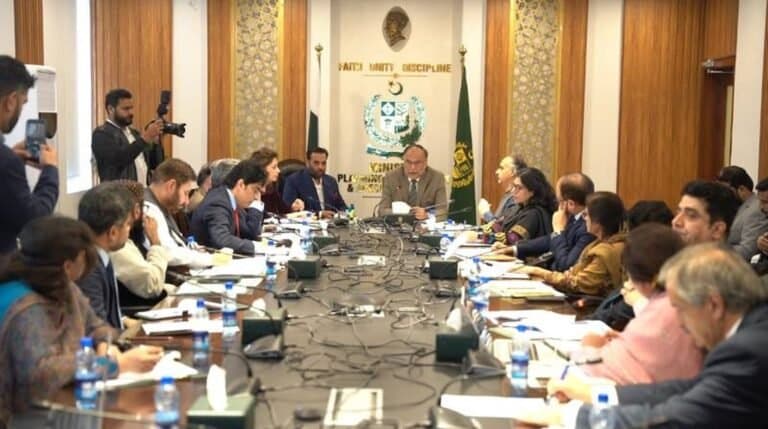
Addressing the first meeting of the Executive Committee of the National Population Council on Thursday, Iqbal expressed concern over the renewed increase in the population growth rate, saying Pakistan had taken its foot off the brake and put it on the accelerator.
ADاشتہار / AdvertisementGoogle Ad
He said the population growth rate had gradually declined since 1980 to 2.4 per cent but increased to 2.55 per cent in the 2023 census, a reversal that he warned would undermine the country’s development efforts if left unchecked.
The minister pointed out that if the economy grew by five per cent while the population increased by 2.5 per cent, real per capita growth would remain at just 2.5 per cent, leaving little improvement in living standards for ordinary citizens despite headline economic growth.
He also highlighted a contradiction in the distribution of national resources, noting that 82 per cent of resource allocation was linked to population size, potentially encouraging population growth rather than rewarding balanced development. Iqbal proposed linking the National Finance Commission (NFC) Award to development and sustainability indicators to encourage provinces to maintain balanced population growth, so that provinces making progress on health and education are recognised in the distribution of funds.
He warned that uncontrolled population growth would make it difficult to meet increasing demands for education, healthcare, employment and basic facilities, putting pressure on already stretched public services and making it harder for the state to provide quality services to every citizen.
The minister said the issue was not limited to healthcare and family planning but was also linked to girls’ education, women’s economic empowerment and social awareness. Keeping girls in school longer and expanding women’s participation in the workforce, he argued, are among the most effective ways to slow population growth over time.
He called for coordinated national efforts involving healthcare, education, community awareness and changes in social attitudes, stressing that controlling population growth was essential for Pakistan’s economic security and future generations. The National Population Council meeting, he said, would serve as the forum for aligning federal and provincial action on the issue.
Related Coverage