ADاشتہار / AdvertisementGoogle Ad
Hormuz Tankers Still Burning Despite Talk of CalmWorld
Fresh strikes on tankers in the Strait of Hormuz and an attack on Aramco’s Riyadh offices show the Middle East shipping crisis is far from over.
Share:
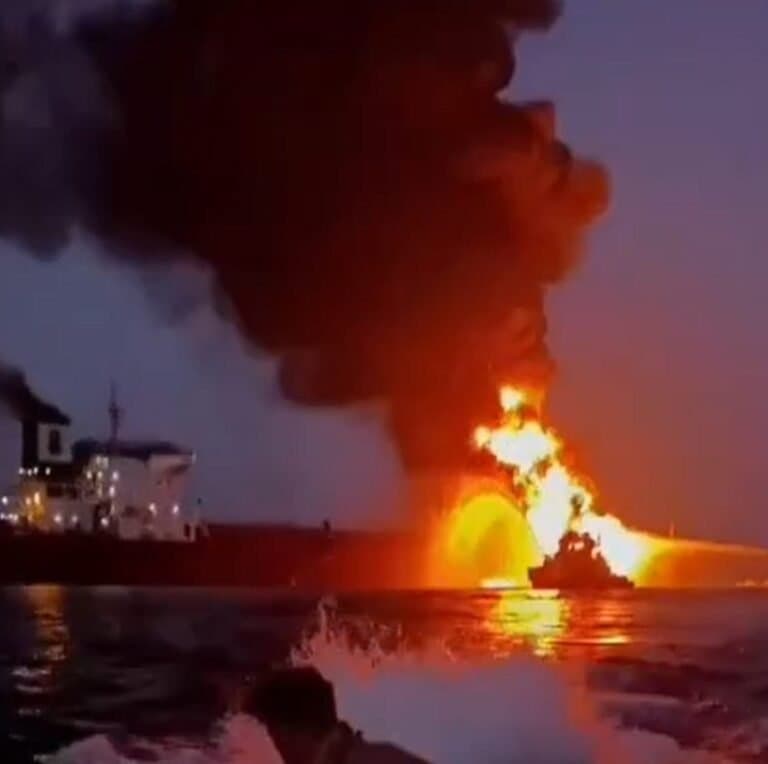
Oil tankers are still catching fire in the Strait of Hormuz, even as financial markets bet that the war involving Iran may be easing. Fresh evidence gathered over the past few days points to more strikes on ships passing through the narrow waterway, along with attacks on energy facilities elsewhere in the region, according to a report by Reuters on Tuesday, 10 November.
Videos posted on social media on Sunday and verified by Reuters showed a tanker managed by Navig8, a shipping company majority owned by ADNOC Logistics and Services, burning near the coast of Oman. A satellite image taken by the European Union’s Copernicus Sentinel-2 satellite on the same day showed a large cloud of black smoke at the same location. Iranian state broadcaster IRIB, citing the Islamic Revolutionary Guard Corps Navy, reported that it was one of three tankers hit on Sunday for using what Iran calls unauthorised routes through the strait.
ADاشتہار / AdvertisementGoogle Ad
The attacks did not stop there. Another tanker was struck northeast of Lima, a port town in Oman’s Musandam region, on Tuesday, according to the United Kingdom Maritime Trade Operations agency, which did not say who carried out the strike. In a separate statement, the Revolutionary Guards Navy said two tankers caught fire after hitting naval mines on the unauthorised route.
The scale of the campaign at sea is striking. Thirty-seven ships were attacked in October, the highest monthly total since the conflict began in late February, according to data from the Washington Institute for Near East Policy. The International Maritime Organization has confirmed 130 incidents, most of them attacks, in the region since the fighting started, with at least 25 seafarers killed.
The strikes are also causing environmental damage. Oil has been leaking from damaged tankers, and a video shared on Monday and verified by Reuters showed oil reaching the shores of Oman, while satellite images showed spills off the coasts of Oman and the United Arab Emirates. The Omani government did not respond to a Reuters request for comment on the video.
Energy infrastructure on land has come under attack as well. Video verified by Reuters showed damage to an office building belonging to Saudi Aramco, the world’s largest oil company, in Riyadh, following missile strikes claimed by Yemen’s Houthis on 8 November. The Saudi Energy Ministry said the building had been targeted in an attempted attack, with debris causing limited damage and no injuries or deaths.
At the same time, United States forces have continued to enforce a naval blockade of Iranian ports. In the latest incident, an American military aircraft fired on and disabled a cargo vessel flying the flag of St Kitts and Nevis that tried to leave regional waters after visiting an Iranian port on Saturday, according to US Central Command.
Despite the violence at sea, crude oil prices fell to two-month lows on Tuesday after US officials played down the need for further military action against Iran. Analysts noted that President Donald Trump has struck a more conciliatory tone since the Republicans’ defeat in the 3 November midterm elections. For shipping crews and insurers, however, the message from the strait is unchanged: the world’s most important oil chokepoint remains dangerous, and the attacks show little sign of stopping.
Related Coverage