ADاشتہار / AdvertisementGoogle Ad
Rawalakot crackdown leaves deaths reported, camps clearedAzad Kashmir
Security forces moved against long-running protest camps in Rawalakot early on Thursday, with reports of civilian deaths and injuries that officials have not yet confirmed.
Share:
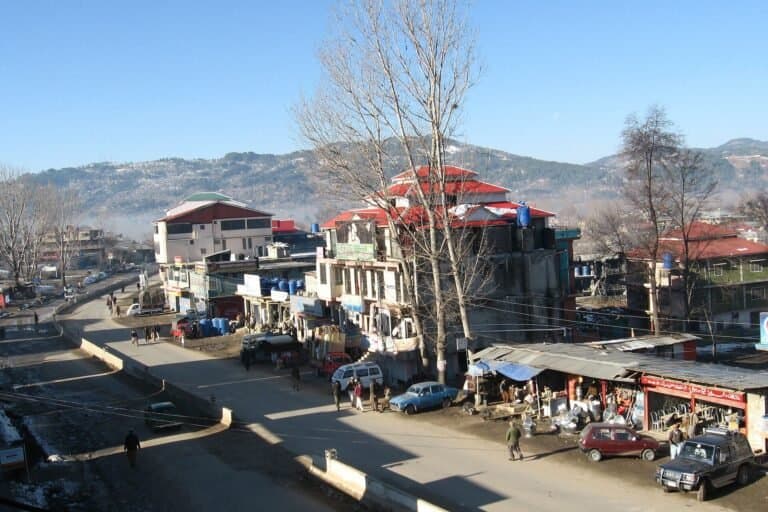
Security forces launched an operation against long-running protest camps in Rawalakot early on Thursday, in a move that has sharply raised tensions across Azad Jammu and Kashmir.
According to reports from the region, the operation began at around 6am at several protest sites, including the Matiyal Mara bus terminal and D-Chowk, where demonstrators have maintained a continuous sit-in since 5 June, demanding political and administrative reforms.
ADاشتہار / AdvertisementGoogle Ad
The sit-in, organised by the Jammu Kashmir Joint Awami Action Committee, had been under way for 153 days. Reports say security forces advanced on the protest sites from several directions and took up positions across the area.
Reports of casualties differ and have not been independently verified. One account puts the number of people killed at three, with 18 injured, while another, citing a local journalist, reports five deaths and names four of those said to have been killed. Police have not confirmed the reported death toll, and no official statement on the operation, the casualties or the injured has been issued so far.
Some reports from activists have also spoken of drone strikes during the operation, but these claims have not been independently verified either, and officials have not commented on them.
News of the reported killings prompted demonstrations in Muzaffarabad, the capital of Azad Jammu and Kashmir, where students gathered at the University of Azad Jammu and Kashmir and at Upper Adda to protest against the security operation and to demand accountability for the reported deaths.
The Joint Awami Action Committee was designated a proscribed organisation by the authorities in June this year under the Anti-Terrorism Act, a decision that has drawn international attention. On Wednesday, six United Nations human rights experts raised concerns about the designation and about alleged state violence against protesters in the region.
The committee’s campaign has centred on demands including the abolition of seats reserved for refugees in the Legislative Assembly, an issue that was rejected by the Supreme Court, and wider questions about the powers of the region’s elected institutions.
Political tensions in the region have been running high for months, with disagreements over proposed constitutional changes and the role of security institutions in the territory’s politics. The region’s prime minister has rejected suggestions that powers transferred to the elected government under the 13th Constitutional Amendment would be reversed.
For now, the picture in Rawalakot remains unclear. With casualty figures disputed and no official account yet available, the full scale of Thursday morning’s operation and its consequences are still to be established.
What is certain is that the confrontation, which had been building for months around the protest camps, has now entered a more serious phase, and that its repercussions are already being felt beyond Rawalakot, in Muzaffarabad and across the region.
Related Coverage