


Srinagar: INDIA Bloc Protests, Demands CEC's Resignation
NC, PDP and Congress held a joint protest in Srinagar under the INDIA bloc's 'Save Democracy Week' campaign, seeking the CEC's resignation over voter fraud.
By: hammadkhaksar
From one rented room to a 100-kanal campus, AKAB School for the Blind now gives 150 visually impaired children free education, hostel care and technology.
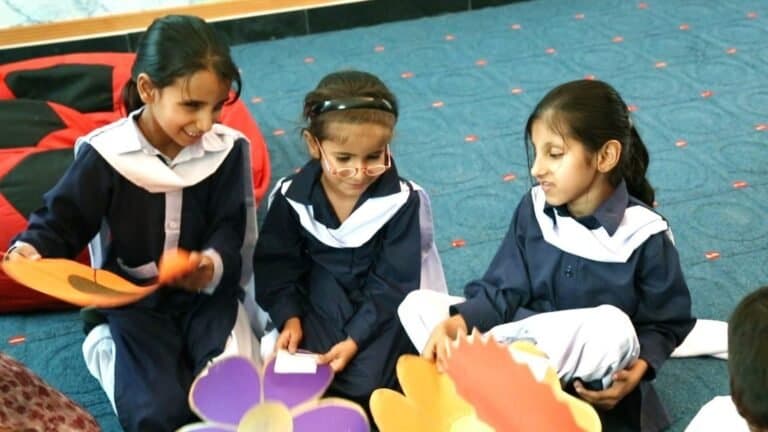
On the outskirts of Mirpur, the lakeside city of southern Azad Jammu and Kashmir, stands a 100-kanal campus where the loss of sight is not treated as the loss of a future. This is the AKAB School for the Blind, an institution that has grown from a single rented room into one of the region’s most respected centres of special education.
The school’s journey began in 1994, when Professor Mohammad Ilyas Ayub — himself born blind 56 years ago into an educated Mirpur family — joined hands with Tariq Awan, a visually impaired educationist from Muzaffarabad, to found the Azad Kashmir Association of the Blind (AKAB). Their aim was to secure education, employment and a dignified place in society for visually impaired people. Ayub, an English literature lecturer at Government College Mirpur, holds master’s degrees in English, special education and Islamic Studies, and joined the AJK education department as a lecturer in 1997.
Three years later, he opened the region’s first school for visually impaired children in a single room of a commercial plaza in Mirpur — with one teacher and a single student. The project found permanent footing when government land grants in 2004 and 2008 allowed philanthropists and members of the Kashmiri diaspora to fund purpose-built hostels, classrooms, a library and a computer lab.
Today the institution provides free education along with hostel accommodation, food, transport, modern technology and training to hundreds of visually impaired children. More than 300 children have been educated at the school so far, and its current rolls carry 150 boys and girls, including 50 day scholars. Another 50 former students now pursuing higher education continue to live in the school’s hostel.
The campus offers Braille and computer education, assistive devices, a Braille printing press, a library, sports facilities and co-curricular activities — along with a standard-sized cricket ground at the heart of its sporting life.
The academic record is striking. Alumnus Junaid Ahmed topped the intermediate board examination, won a scholarship to a US university, and returned for postgraduate studies at the University of Gujrat. In recent intermediate examinations two female students crossed the 1,000-mark threshold, the ninth-grade AJK board result last month was a perfect 100 per cent, and seven alumni have cleared Public Service Commission examinations to become university and college lecturers.
Sport is woven into the school’s identity. Prof Ayub serves as vice chairman of the Pakistan Blind Cricket Council, and the reigning world champion Pakistan national blind men’s team counts its captain, head coach Muhammad Jamil — himself an AKAB student — and three core players from the school. The national blind women’s team also includes two AKAB players, and the campus hosts national team training camps.
Prof Ayub, a recipient of the Tamgha-i-Imtiaz, says the school’s philosophy rests on dignity rather than charity — on helping students move beyond dependence to become confident, self-reliant and active members of society, with equal opportunity rather than sympathy.
Challenges remain beyond the campus gates. UK-based Kashmiri journalist Sajid Yousaf, a campaigner for AKAB, points to a gap between policy and practice: although a one-per-cent employment quota is reserved for persons with disabilities, he notes, it rarely translates into jobs for visually impaired graduates. For Prof Ayub, the mission is unfinished — education must be matched by real opportunities once schooling ends.
NC, PDP and Congress held a joint protest in Srinagar under the INDIA bloc's 'Save Democracy Week' campaign, seeking the CEC's resignation over voter fraud.
By: hammadkhaksar poonch
The sweep — described by officials as routine administrative rotation — hands new chiefs to Ganderbal, Kupwara, Bandipora, Ramban and Poonch districts, alongside fresh heads for key institutions including the Police Housing Corporation, Home Guards, CID and the Traffic wing.
By: hammadkhaksar
The Omar Abdullah-led government has notified the City Gas Distribution Policy, 2026, approving a framework to expand piped natural gas and CNG across all 20 districts of Jammu and Kashmir, with priority connectivity for major industrial estates.
By: hammadkhaksarStay updated with the latest news, breaking developments, and insightful coverage from Azad Kashmir and Pakistan.
Follow on Facebook