Opposition senators challenged the Khyber Pakhtunkhwa emergency in the Senate debate; the government defended it as a lawful last resort against militancy.
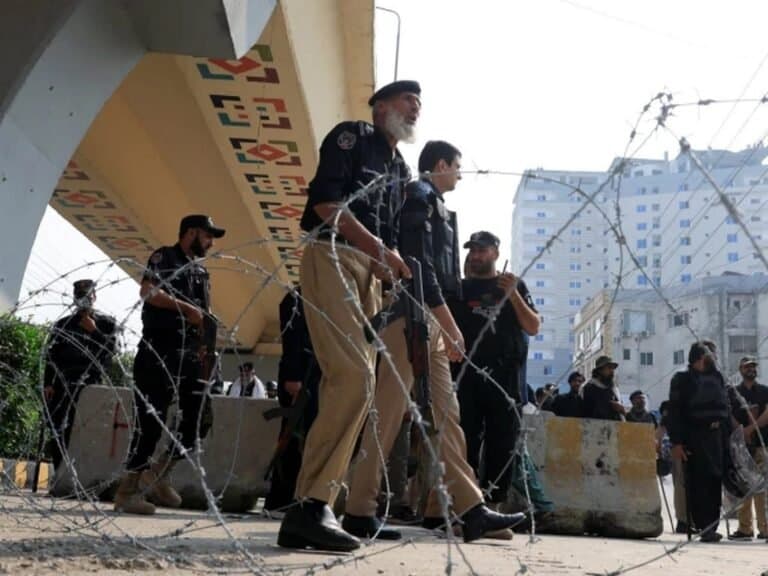
ISLAMABAD: Senators on Tuesday debated the legitimacy of the federal government’s decision to impose emergency rule in Khyber Pakhtunkhwa, with the opposition questioning the constitutionality of the move and the treasury defending it as a last resort against rising terrorism.
The National Assembly, however, was adjourned after a brief sitting, in line with parliamentary convention requiring the first day’s proceedings to be confined to prayers following the death of a lawmaker earlier this month. The political crisis in Khyber Pakhtunkhwa nevertheless dominated the day.
ADاشتہار / AdvertisementGoogle Ad
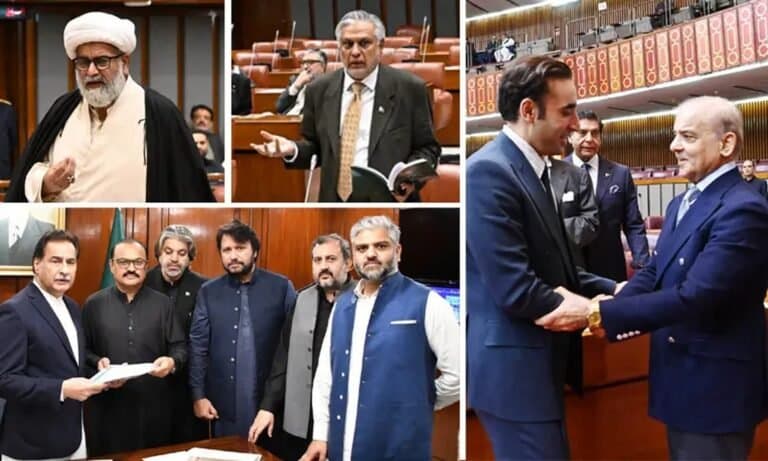
Speaking in the upper house, PTI parliamentary leader Barrister Ali Zafar said what was happening in the province was not merely an administrative decision but a test of Pakistan’s Constitution. “The Constitution must be our shield in a crisis, not a casualty of the crisis,” he said, adding that the question was whether the Constitution was being used to protect Pakistan or an emergency was being used to change the political order of the country.
Mr Zafar said no political party or Pakistani wanted terrorism to flourish and that it must be defeated with full strength, but argued that the fight against terrorism should not become a fight against constitutional democracy. He said Article 232 was an emergency power and not a political weapon, and that Article 234’s extraordinary arrangements were meant for extraordinary circumstances. Their existence, he said, did not mean they could be exercised without limits.
He warned that the move concerned provincial autonomy, federalism, elected representation, fundamental rights and the balance between the federation and its units, and called on the Senate to examine the legal grounds and scrutinise the necessity and proportionality of the decision.
<h2>Government’s defence</h2>
Deputy Prime Minister Ishaq Dar said the federal cabinet had “rightly decided” last week that the process of political reconciliation with the PTI was over, adding that the PPP and the PML-N had both made efforts to reach an understanding with the opposition party but had failed. He said Maulana Fazlur Rehman of the JUI-F had come to help break the deadlock, but by then “things had gone far beyond” repair.
Interior Minister Mohsin Naqvi claimed the Constitution had not been violated and that the government had acted strictly according to procedure, with the PML-N and the PPP examining every clause together to ensure no provision was violated.
Mr Naqvi said the option of emergency or governor’s rule had existed even last November, but the government had exercised restraint. It had contacted the PTI leadership, including Barrister Gohar Ali Khan, on Oct 10, asking him to suggest amendments to paragraph four of the draft agreement. Six amendments were made, he said, and the draft was sent to the chief minister, who forwarded it to Murad Saeed, after which the matter was “sabotaged”.
Opposition senator Allama Raja Nasir Abbas, a PTI ally, termed Oct 11 — when the emergency and governor’s rule were imposed — a “black day”, questioning why the emergency had been imposed only in Khyber Pakhtunkhwa and urging the immediate withdrawal of the decision. In the National Assembly, Barrister Gohar Ali Khan was not permitted by Speaker Ayaz Sadiq to speak on the issue, and opposition members later protested outside the Parliament House.