ADاشتہار / AdvertisementGoogle Ad
A simple breath test can now reveal your lung antibodiesHealth
Karolinska researchers measured virus antibodies in exhaled breath for the first time, opening a non-invasive window into the small airways.
Share:
Scientists have measured antibodies against respiratory viruses in exhaled breath for the first time, opening a non-invasive way to study immunity deep inside the lungs.
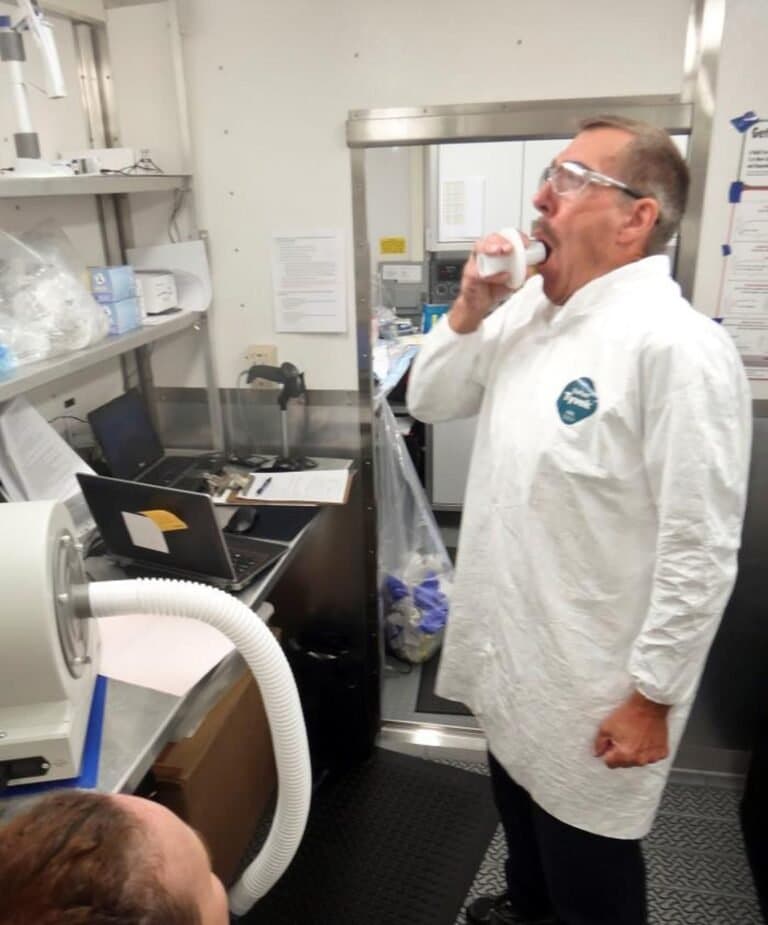
Researchers at Karolinska Institutet in Stockholm, working with Danderyd Hospital, Uppsala University and SciLifeLab, used a method called PExA, short for Particles in Exhaled Air, to collect tiny particles from the lining fluid of the small airways as volunteers breathed into a specially designed instrument.
ADاشتہار / AdvertisementGoogle Ad
The study, published online in the journal eBioMedicine on 2 November, included 28 participants from the COMMUNITY cohort at Danderyd Hospital. Eighteen of them had recently had a respiratory tract infection, and the team analysed paired samples of blood, nasal secretions and exhaled breath from each person.
In the exhaled breath samples, the researchers detected IgA and IgG antibodies directed against SARS-CoV-2, the influenza virus and respiratory syncytial virus, known as RSV. These are three of the viruses that cause the most common and most serious respiratory infections.
The results showed that IgG levels in the lower airways largely mirrored the levels found in blood, while IgA showed a different pattern. The researchers said this was consistent with IgA coming more from local mucosal responses in the lungs themselves, rather than simply leaking in from the bloodstream.
Until now, sampling the small airways has required invasive procedures such as bronchoscopy, in which a tube is passed into the lungs. That has made it difficult to study how immunity works in the lower airways, even though antibodies in the mucosal lining play an important role in protecting against viruses such as influenza, SARS-CoV-2 and RSV.
The new method could make it easier to study immune responses after infection or vaccination, and to evaluate preventive treatments. It could also help researchers understand why immunity differs between the upper and lower airways, which matters for preventing severe disease such as pneumonia.
Charlotte Thalin, adjunct professor at the Department of Clinical Sciences at Danderyd Hospital, Karolinska Institutet, and a co-last author of the study, said the method opens up new possibilities for understanding how immunity differs between the upper and lower airways, particularly for preventing severe disease.
The researchers stressed that this was an initial methodological study with a limited number of participants, and that further validation in larger studies is still needed before the method can be used widely.
Even so, the work is a notable step for respiratory medicine. A breath test that can read the immune state of the small airways would be far easier to repeat, and far more comfortable for patients, than any procedure that enters the lungs directly.
If larger studies confirm the findings, the technique could be used to check how well vaccines protect the lower airways, to follow immunity over time, and to study why some people develop severe lung disease after a respiratory infection while others do not.
The study was reported by Hospimedica and MedicalXpress, and the full paper is published in eBioMedicine. The researchers said their next step is to test the method in bigger groups, including people with different respiratory conditions.
Related Coverage