ADاشتہار / AdvertisementGoogle Ad
Hoax bomb threats diverted flights across EuropeWorld
Flights were diverted, escorted by fighter jets and airports briefly closed across Europe after a wave of false bomb threats — all later confirmed as hoaxes.
Share:
A coordinated wave of false bomb threats disrupted commercial flights across Europe, causing diversions, military escorts and temporary airport closures, before authorities confirmed that all of the threats were malicious hoaxes and that no explosive devices had been found.
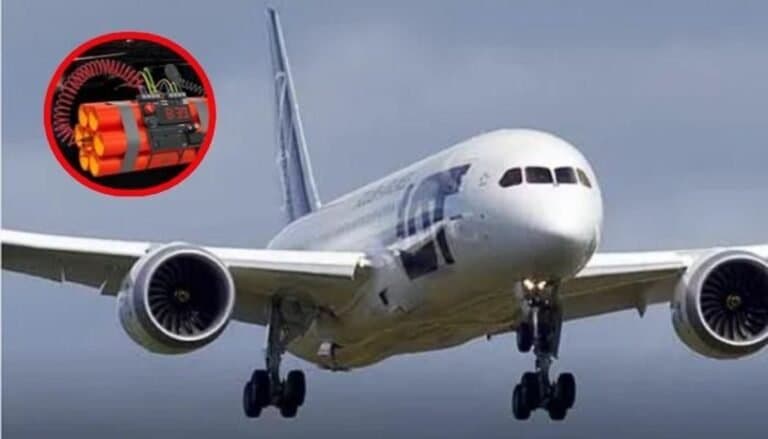
In Italy, Italian Air Force Eurofighter jets escorted Ryanair flights into Rome Fiumicino airport as a precaution. In Poland, a LOT flight from London Heathrow to Warsaw Chopin was diverted to Modlin airport, temporarily closing it while checks were carried out.
ADاشتہار / AdvertisementGoogle Ad
In Spain, a flight from Manchester to Murcia was inspected by the Civil Guard after a threat was received. In Bulgaria, two flights into Sofia were inspected: a Wizz Air flight from Bergamo carrying 176 passengers, and a Ryanair flight from Dublin carrying 186 passengers. Both aircraft landed safely and were checked before passengers continued their journeys.
An SAS flight from Copenhagen to Warsaw landed as scheduled, while a day earlier a Wizz Air flight from London to Sofia was diverted to Budapest, according to Hungarian Defence Minister Romulusz Ruszin-Szendi. Separately, the Panama-flagged cruise ship Crown Iris was searched at Syros in Greece after a bomb claim, and no device was found in the initial search.
Aviation risk analyst Rhys Jones of Osprey Flight Solutions, quoted via Reuters, said seven confirmed bomb threats in a single day was exceptional. He said general disruption, rather than a specific target, appeared to be the aim of the wave of threats.
No claim of responsibility and no attribution to any party was reported. That absence of a claim is itself part of the picture: the threats caused real disruption to airlines, airports and passengers, without any group publicly owning them.
For passengers, the episode meant delays, diversions and uncertainty, even though every threat ultimately proved false. For airlines and airport authorities, it meant activating security procedures designed for exactly this scenario, including inspections, escorts and, where necessary, temporary closures.
Hoax threats are treated seriously by aviation authorities precisely because they cannot be dismissed until aircraft and airports have been checked. The cost of caution is disruption; the cost of ignoring a threat could be far worse, which is why procedures are followed even when the eventual outcome is a hoax.
Authorities across the affected countries have now confirmed that no devices were found. The investigation into who sent the threats, and why, will continue, but for travellers the immediate message is that the disruption has passed and the threats were false.
Related Coverage