


ADاشتہار / AdvertisementGoogle Ad
Drone Strike Kills Zaporizhzhia Nuclear Plant WorkerWorld
The IAEA says a Zaporizhzhia nuclear plant worker was killed in a drone attack, days after the plant lost all off-site power and ran on diesel generators.

Share:
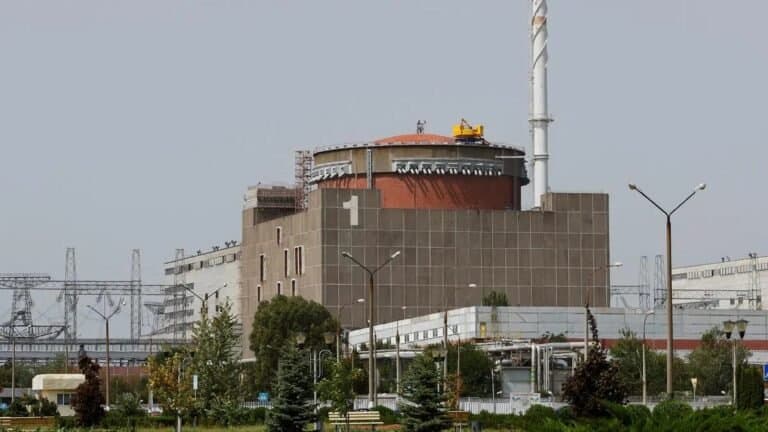
A worker at the Zaporizhzhia nuclear power plant in Ukraine has been killed in a drone attack, the International Atomic Energy Agency said on Monday, in the latest deadly incident at Europe’s largest nuclear facility.
The IAEA, the United Nations nuclear watchdog, said one employee of the plant in Russian-held south-eastern Ukraine was killed in a drone attack on Monday. The agency also said that an employee of the nearby Zaporizhzhia thermal power plant had been killed by a drone on Monday in a separate attack.
ADاشتہار / AdvertisementGoogle Ad
Director General Rafael Grossi strongly condemned the deadly attacks, saying they represented unacceptable attacks that violated the indispensable pillars of nuclear safety. The IAEA said it had been informed that an employee was killed in the drone attack, in the latest incident affecting plant staff and further endangering nuclear safety and security during the military conflict.
The agency’s chief emphasised that the attack came only a few days after another member of staff had also died in a drone attack. On October 29, a drone attack reportedly killed a welder working at the plant’s centralised repair workshop, according to the IAEA. On October 3, the agency reported a series of drone attacks that damaged transformers at the nearby thermal power plant, threatening the nuclear facility’s external electricity supply. In August, a drone explosion at a bus stop used by plant personnel killed one person and injured 15 others.
The plant, located near the city of Enerhodar in southern Ukraine, has six pressurised water reactors and is the largest in Europe. It has been controlled by the Russian army since the early weeks of the full-scale invasion in 2022, and sits near the front line in a part of south-eastern Ukraine captured early in the war. Both sides have repeatedly accused each other of putting it in jeopardy.
The killing came a day after the plant lost access to all off-site power for several hours on November 8, forcing it to rely on emergency diesel generators for cooling and safety functions. The IAEA announced the outage around noon local time, and about ten hours later confirmed that power had been restored. Mr Grossi called it the 27th such event of the war, and the agency said the exact cause and location of the disconnection were not yet known. The plant’s spent fuel pools and reactor vessels require continuous cooling power regardless of shutdown status, and the IAEA has repeatedly warned that sustained diesel-dependent operation creates radiological risk.
The agency has maintained a permanent monitoring presence at the Russian-occupied facility since September 2022 over concerns about the risk of a nuclear accident, and its teams at the site continue to hear explosions, at times nearby. Mr Grossi has called on all parties to exercise maximum restraint and halt attacks that could threaten nuclear plants, their personnel or supporting infrastructure. The deaths on Monday underlined how the danger is not only to the reactors themselves, but to the workers who keep them safe.
Related Coverage