
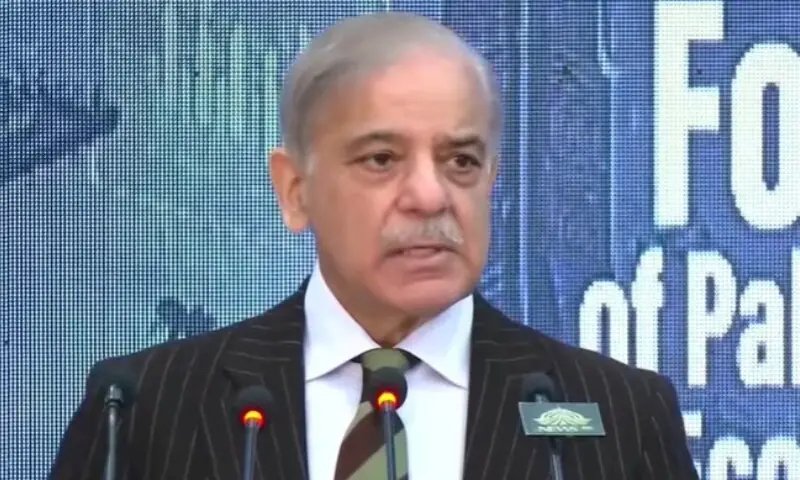
Prime Minister Shehbaz Sharif on Friday unveiled a Rs4.4 per unit reduction in electricity tariffs for the industrial sector, describing the move as a step aimed at boosting productivity, competitiveness, and exports.
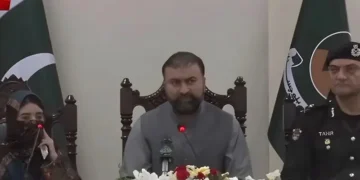
The announcement was made during an Islamabad ceremony held in honor of leading exporters and business figures, where the prime minister acknowledged their role in supporting the national economy.
READ MORE: KP Chief Minister Approaches Supreme Court to Seek Medical Access for Imran Khan
“A reduction of Rs4.4 per unit is being implemented for industries,” the premier said, adding that he would have cut tariffs by an additional Rs10 if circumstances allowed. “But as you all know, there are limitations,” he remarked.
The prime minister also revealed that wheeling charges for industries would be reduced to below Rs9, a move he said would enable industrial units to sell surplus electricity to nearby facilities.
To further ease financial pressures, PM Shehbaz announced a cut in the export refinance rate, lowering it from 7.5 percent to 4.5 percent with the support of Pakistan’s banking sector.
At the start of his address, the premier praised exporters and business leaders for their resilience and efficiency, crediting them for earning billions of rupees for the country over the past year. “The entire nation congratulates you on your achievements,” he said.
Reflecting on recent economic challenges, PM Shehbaz recalled that Pakistan stood on the verge of default in 2023, with daily speculation about an impending financial collapse. He described the situation as one of the toughest moments in the country’s history.
The prime minister recounted a meeting with IMF Managing Director Kristalina Georgieva in Paris, during which concerns were raised over Pakistan’s past performance under IMF programs. He said he personally assured her that his government would fully implement the agreed reforms.
“After returning to Pakistan, she called to confirm that the IMF team would engage with us, provided we honored our commitments. That is how Pakistan was pulled back from the brink of default,” he said.
Turning to current conditions, PM Shehbaz noted that foreign exchange reserves had doubled in the third quarter, though he acknowledged that this included loans from friendly countries. He said he, along with senior military leadership, including Field Marshal Asim Munir, visited several countries to seek financial support while briefing them on Pakistan’s IMF program.
Expressing gratitude, the prime minister said China, Saudi Arabia, the United Arab Emirates, and Qatar stepped in at critical moments. However, he cautioned that external borrowing comes with obligations.
‘Economy Has Stabilised’
The prime minister said he could now state “without hesitation” that Pakistan’s economy had stabilized. He pointed to single-digit inflation and a policy rate of 10.5 percent, recalling that not long ago inflation was surging and interest rates had climbed above 21 percent.
He acknowledged the hardships faced by industrialists and traders during that period, saying they endured the challenges with hope for better days ahead.
However, PM Shehbaz warned that stabilization alone was not sufficient. He highlighted rising poverty, unemployment, and limited export profitability, noting that Pakistani industries continued to struggle with higher production costs compared to regional competitors.
Emphasizing that the government cannot control private-sector decisions, he stressed the need for sustainable, export-led growth. “There is no alternative,” he said, adding that small and medium-sized enterprises must be supported jointly by the public and private sectors.
The prime minister expressed confidence in the business community’s vision and commitment, saying their leadership could transform Pakistan’s economy within a few years. As a gesture of appreciation, he announced blue passports for the award-winning exporters and designated them as “ambassadors at large.”
Reviving PIA
PM Shehbaz also touched on the recent privatization of Pakistan International Airlines, voicing optimism that the national carrier would regain its former stature.
Recalling PIA’s once-strong global reputation, he said the airline had ranked among the world’s top ten and carried the slogan “Great people to fly with” across major European cities. “We need to bring that era back,” he said.
Referring to Arif Habib, whose consortium acquired a 75 percent stake in PIA for Rs135 billion in December, the prime minister expressed full confidence in the new owners’ ability to restore the airline’s legacy, assuring them of continued government support.
For the latest news, follow us on Facebook DAILY HAYAT - Mirpur A.J.K