

Prime Minister Shehbaz Sharif on Friday officially reinstated the government-backed Sehat Card health insurance program for residents of the Islamabad Capital Territory (ICT), Azad Jammu and Kashmir (AJK), and Gilgit-Baltistan (GB), restoring a facility that had remained suspended for months.
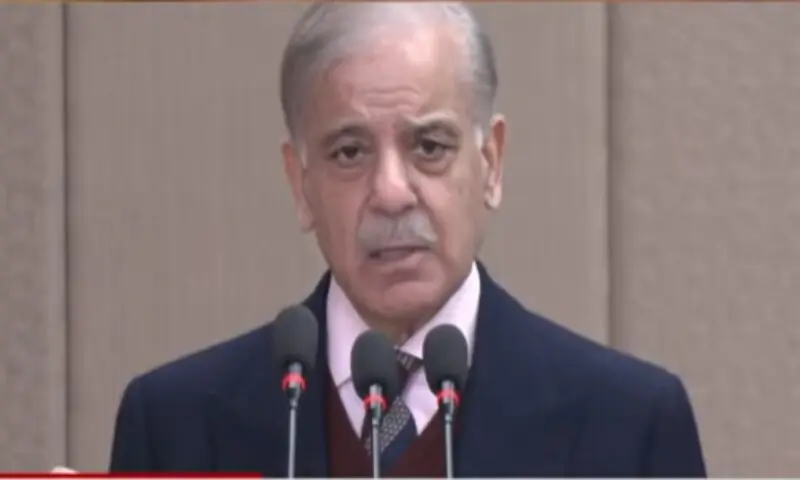
Addressing the launch ceremony in Islamabad, the prime minister said access to quality healthcare is a fundamental right of every citizen and stressed that essential medical services should reach people at their doorsteps. He described the revival of the Sehat Card as another prompt step taken by his government to serve the public.
READ MORE: Pakistani Passport Climbs Five Spots to 98th Place in Global Ranking
PM Shehbaz recalled that the program was first launched in 2016 under the leadership of Nawaz Sharif, terming its restoration a continuation of that vision. Initially, the scheme was introduced in Punjab, Balochistan, the former Federally Administered Tribal Areas (now part of Khyber Pakhtunkhwa), and ICT, with plans for gradual expansion.
In 2019, the PTI government reintroduced the initiative under the name Sehat Insaf Card, introducing changes such as annual health coverage of up to Rs720,000 per family. The revised model also extended coverage to low-income earners making less than Rs150,000 annually, with a small contribution to the insurance pool.
However, the program remained partially suspended in federal territories for nearly three years and was completely halted in Islamabad, AJK, and GB from March 2024 due to unpaid government dues, causing widespread hardship for residents.
Emphasizing the importance of health, the prime minister said nothing in life is more valuable, as good health enables individuals to study, earn a living, participate in sports, and lead productive lives. He announced that Sehat Cards were now being reissued for people in Islamabad, AJK, and Gilgit-Baltistan.
PM Shehbaz congratulated Health Minister Mustafa Kamal, the health secretary, and their teams for making the revival possible. He highlighted that while affluent individuals can afford expensive treatment, ordinary citizens, laborers, and orphaned children often struggle to bear medical costs, and untreated illness can devastate entire families.
He reaffirmed that healthcare and access to treatment are the rights of all Pakistanis and urged the health ministry to ensure transparent and effective implementation of the program through third-party monitoring. The prime minister also expressed hope that the scheme would continue at pace and under strict oversight.
Referring to provincial initiatives, PM Shehbaz said the program is already functioning in Punjab, with billions being spent on healthcare, and is also operating successfully in Balochistan and Khyber Pakhtunkhwa. He noted that Sindh has its own health initiatives and assured that he would consult the Sindh chief minister to explore extending similar facilities there.
Seventy Hospitals to Be Added, Says Health Minister
Speaking at the event, Health Minister Mustafa Kamal thanked the prime minister for his leadership and support in reviving the long-stalled program. He said the Sehat Card was originally launched in 2016 and adopted by the provinces but had been discontinued in federal territories over the past three years, prompting the current government to restore it.
Under the revived scheme, free healthcare services will be provided to nearly 10 million residents of Islamabad, AJK, and Gilgit-Baltistan. Kamal explained that beneficiaries would be able to receive treatment at hospitals without making cash payments, using their Sehat Cards instead.
He credited the prime minister’s efforts over the past four to five weeks for bringing a “dead program” back to life and stressed that healthcare extends beyond treatment to prevention, maternal care, child immunization, and access to clean drinking water.
Highlighting systemic challenges, the health minister noted that hospitals are severely overcrowded, placing immense pressure on doctors who are often forced to treat far more patients than ideal.
Kamal announced that 70 additional hospitals would be empanelled across Islamabad, AJK, and GB under the program. He also said that residents holding CNICs from these regions would be eligible for treatment at 16 hospitals in Karachi.
However, he pointed out that Sindh currently remains the only province where the Sehat Card cannot be used. The ministry has identified 10 urban and rural districts in Sindh for inclusion and requested an allocation of Rs24 billion for two years in the federal budget, with plans to make the program self-sustaining by the third year.
For the latest news, follow us on Facebook DAILY HAYAT - Mirpur A.J.K