

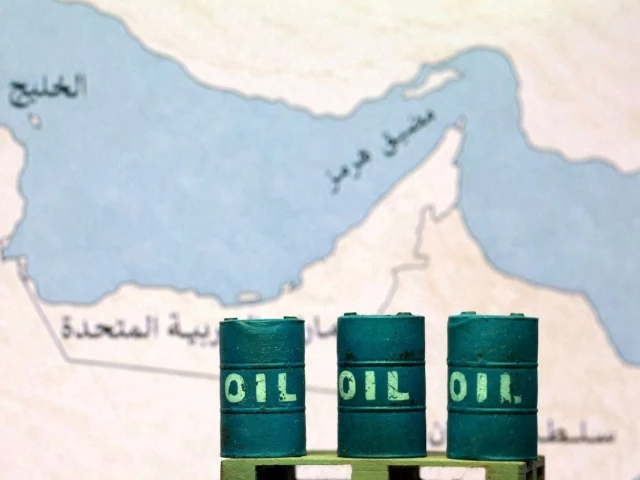
The Islamic Revolutionary Guard Corps (IRGC) has announced that the Strait of Hormuz will remain under strict control, stating that its status will not change until the United States restores what it called “full freedom of navigation” for Iranian vessels.
According to Iran’s military leadership, the strategic waterway will stay in a “previous condition” and under firm supervision until Washington lifts what Tehran describes as a blockade affecting maritime movement linked to Iran. The IRGC accused the US of engaging in “acts of piracy and maritime theft under the guise of a so-called blockade,” as reported by Iranian state media.
Officials further stated that control over the Strait of Hormuz has effectively returned to heightened military oversight, with armed forces maintaining strict monitoring of all transit activity through the critical shipping lane.
READ MORE: Trump Applauds Pakistan’s Mediation Role as Strait of Hormuz Reopens
Claims of Spy Networks and Arrests
In a separate announcement, Iranian military authorities said they had dismantled multiple alleged espionage networks linked to the United States, Israel, and the United Kingdom. The IRGC claimed these groups were involved in intelligence gathering and attempts to incite unrest across Iran.
The alleged operations were uncovered in several provinces, including East Azerbaijan, Kerman, and Mazandaran. State-linked reports said more than 120 individuals were detained on suspicion of involvement, with accusations ranging from transmitting sensitive coordinates to organizing coordinated spy activity.
Mixed Signals on Strait and Diplomacy
Despite heightened tensions, shipping activity has continued in limited form, with tankers observed moving through the Strait of Hormuz following recent regional ceasefire arrangements. Some vessels reportedly resumed transit through Iranian waters near key island routes.
Former US President Donald Trump commented on the situation, hinting at positive diplomatic developments while also warning that military pressure could resume if negotiations fail. Speaking aboard Air Force One, he suggested progress in talks but did not provide details.
Trump also reiterated that preventing Iran from obtaining nuclear weapons remained the central objective of US policy, adding that further decisions would depend on ongoing discussions.
Regional Mediation Efforts
Meanwhile, regional diplomacy is continuing behind the scenes. Egyptian officials confirmed coordination with Pakistan and other countries, including Turkey and Saudi Arabia, to develop a broader framework aimed at stabilizing tensions between the United States and Iran.
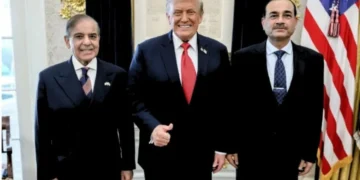
Separately, Pakistan’s involvement in mediation efforts has been highlighted in ongoing discussions, with Field Marshal Asim Munir playing a key role in backchannel talks aimed at reducing escalation risks in the region.
Uncertain Path Forward
While diplomatic efforts continue, both sides have issued conflicting signals. Iranian officials insist the Strait will remain under strict control if pressure continues, while US leadership has maintained that sanctions and maritime restrictions will stay in place until a final agreement is reached.
Oil markets and global shipping remain sensitive to developments, as the Strait of Hormuz continues to be one of the world’s most critical energy transit routes, carrying a significant share of global crude exports.
For the latest news, follow us on Facebook DAILY HAYAT - Mirpur A.J.K