


ADاشتہار / AdvertisementGoogle Ad
Pakistan: Nuclear Decisions Must Stay Under Human ControlPakistan
Ambassador Syed Haider Shah told the UN Security Council that artificial intelligence must never target nuclear command systems and that emerging technologies need inclusive global governance.
Share:
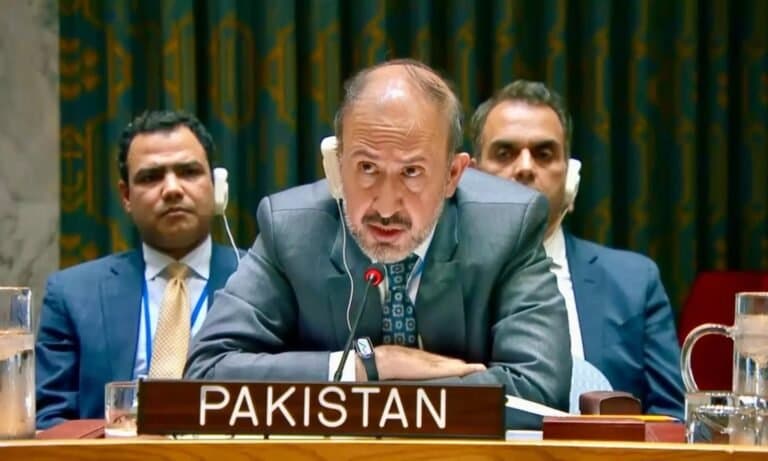
UNITED NATIONS: Pakistan has told the United Nations Security Council that decisions on the use of nuclear weapons must remain under human control, warning that artificial intelligence must never be used to target nuclear command, control and communications systems.
Pakistan’s Permanent Representative to the United Nations, Ambassador Syed Haider Shah, delivered the warning during a high-level open debate of the Security Council on 24 November 2026, held under the Latvian presidency on conflict resolution in an era of rapid technological change.
ADاشتہار / AdvertisementGoogle Ad
“This is most critical in the nuclear domain, where decisions on the use of nuclear weapons must remain under human control, and AI systems must never be used to target nuclear command, control and communications systems,” Ambassador Shah said, according to the Permanent Mission of Pakistan to the UN.
He told the 15-member Council that emerging technologies needed inclusive global governance, and that human judgment and control must remain central to the design, development and deployment of new technologies. Without agreed rules, he warned, fast-growing technology could worsen the arms race that already threatens global peace and security.
The envoy stressed that the integration of artificial intelligence into military systems could introduce dangerous risks, particularly in the nuclear domain, where technological interference, miscalculations or compressed decision-making timelines could have catastrophic consequences. He said AI in military operations shortens the time humans have to think during a crisis.
Ambassador Shah also called for military restraint and confidence-building steps to lower the risk of mistakes and rushed decisions during a crisis. He said the world must make sure that new technologies serve peace and security rather than becoming tools of confrontation.
UN Secretary-General Antonio Guterres also addressed the session, warning that artificial intelligence has entered the battlefield and that humans must retain control over life-and-death decisions. He urged negotiations on a legally binding instrument on lethal autonomous weapons and cautioned that integrating AI into nuclear command systems would be a recipe for catastrophe.
Guterres said that as long as nuclear weapons exist, only humans should decide whether to use them. He also warned that AI-driven falsehoods undermine peace, while acknowledging that technology can support peacekeeping, mediation and civilian protection.
Pakistan has asked the Security Council to create strong global rules for artificial intelligence and other emerging technologies. The debate brought together Council members and senior UN officials to discuss how the international community should govern technologies that are reshaping conflict, from autonomous weapons to cyber tools and disinformation.
For Pakistan, the message was clear: the speed of technological change must not outrun the rules that keep it in check, and no machine should ever be given the power to decide on the use of a nuclear weapon.
Related Coverage