ADاشتہار / AdvertisementGoogle Ad
UN Backs Pakistan’s Call for Diplomacy During WarPakistan
The UN Security Council has adopted a Pakistan-initiated statement urging states to keep diplomacy alive during war, backing ceasefires and mediation.
Share:
New York: The United Nations Security Council has adopted a presidential statement initiated by Pakistan urging countries to keep diplomacy alive even during active hostilities. The statement, titled ‘The Role of Diplomacy during Active Hostilities’, was adopted on Thursday under the November presidency of Latvia, whose Ambassador Sanita Pavļuta-Deslandes chaired the proceedings.
The statement calls on countries to maintain diplomatic engagement during armed conflicts and to work towards ceasefires, de-escalation and lasting political settlements. It stresses that dialogue should continue even when fighting is under way, rather than being abandoned until the guns fall silent.
ADاشتہار / AdvertisementGoogle Ad
It encourages the use of mediation, good offices and direct or indirect communication between conflicting parties. According to the statement, such engagement should aim to facilitate cessations of hostilities, ensure safe humanitarian access, protect civilians and prevent conflicts from spreading to other regions.
Building on Resolution 2788
The presidential statement builds on Security Council Resolution 2788, which was unanimously adopted in July 2025 during Pakistan’s presidency of the Council. That resolution also focused on strengthening the role of diplomacy in resolving international disputes peacefully.
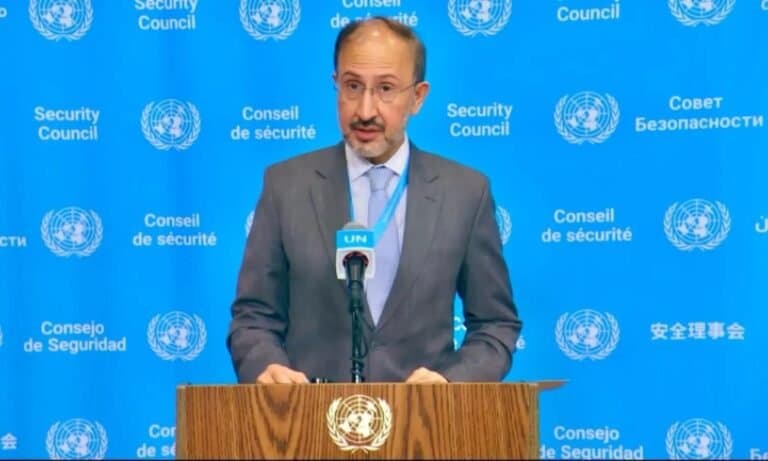
Pakistan’s Permanent Representative to the United Nations, Ambassador Syed Haider Shah, welcomed the adoption of the statement. ‘Diplomacy must not end when hostilities begin,’ he said, adding that keeping channels of communication open during conflicts was essential for protecting lives and finding a way back to peace.
The statement does not impose binding obligations, but presidential statements of the Security Council carry significant political weight and signal the Council’s collective position. Diplomats say the text reflects a growing concern that conflicts are lasting longer and that early diplomatic engagement can prevent them from escalating further.
Pakistan has long argued at the United Nations that diplomacy, mediation and dialogue should remain central to the Council’s work, and the adoption of the statement is being seen as a notable success for the country’s diplomacy at the world body.
The text places particular emphasis on keeping channels of communication open between parties in conflict, including through intermediaries, so that even where direct talks are not possible, messages can still pass between the sides. Diplomats say this reflects the practical reality of modern conflicts, where fighting often continues for years while formal negotiations remain stalled.
The statement also links diplomacy to the protection of civilians, noting that continued engagement can help secure humanitarian access and reduce the risk of conflicts spreading beyond their borders. By adopting the text, the Council has signalled that diplomacy is not a step to be taken only after fighting ends, but a tool to be used throughout a conflict.
Related Coverage