ADاشتہار / AdvertisementGoogle Ad
NASA’s Swift Telescope Burns Up After 22 Years in SpaceTechnology
NASA’s Swift observatory has burned up over Indonesia after 22 years studying the universe’s most violent explosions, far outliving its two-year plan.

Share:
After 22 years of watching the most violent explosions in the universe, NASA’s Swift space telescope has met a fiery end of its own. The observatory tumbled out of orbit on Wednesday and burned up in Earth’s atmosphere above Indonesia, bringing down the curtain on a mission that was only ever meant to last two years.
The United States Space Force confirmed that Swift re-entered the atmosphere at 7:39 in the morning Eastern time, streaking across the sky at about 22 times the speed of sound over North Sumatra province, roughly 200 miles north of the equator. NASA said most of the 3,200-pound spacecraft would have been incinerated by the heat of re-entry, and no damage or injuries on the ground were reported.
ADاشتہار / AdvertisementGoogle Ad
Swift, formally known as the Neil Gehrels Swift Observatory, was launched in November 2004 to study gamma-ray bursts, the most intense blasts of energy known in the cosmos. Fitted with three telescopes working across different wavelengths, the 500-million-dollar spacecraft was designed to spot these fleeting explosions within seconds and alert telescopes on the ground. It went on to detect thousands of cosmic events and reshape astronomers’ understanding of how stars die.
The beginning of the end came as the ageing observatory began falling from orbit faster than expected. Unusually strong solar activity in late 2024 thickened the upper atmosphere, increasing drag on the spacecraft and pulling it steadily downward. By the time it made its final observation on October 20, its orbit had dropped so low that continued operations were impossible.
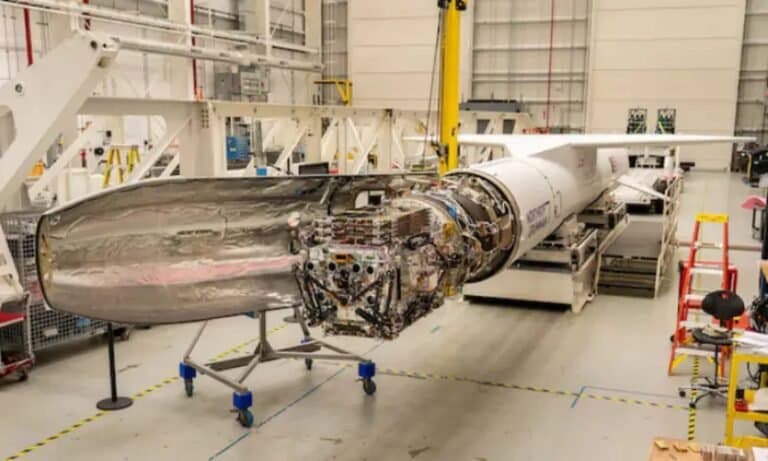
NASA made one last attempt to save it. A rescue spacecraft built by Arizona-based company Katalyst Space Technologies was launched in July to grab hold of Swift with robotic arms and lift it back into a higher orbit. The first-of-its-kind mission failed, however, when the rescue craft suffered problems with its orientation control system and other malfunctions.
Space officials had calculated the risk to people on the ground as very low, putting the odds of anyone being harmed by falling debris at one in 2,100. While most of Swift burned away high above Earth, experts expected a small fraction of its toughest components to survive the plunge, most likely falling into the ocean. Its re-entry zone stretched in a broad band around the tropics, taking in parts of Africa, Australia, India, Southeast Asia and the Americas. For astronomers, the loss closes a remarkable chapter: a spacecraft built for two years that kept watch over the sky for more than two decades.
Related Coverage