
ADاشتہار / AdvertisementGoogle Ad
Johnson steps aside after midterm wipeout shakes GOPWorld
House Speaker Mike Johnson will not seek the Republican leadership post in the next Congress, a decision that opens a fast contest to lead a smaller, chastened party.
Share:
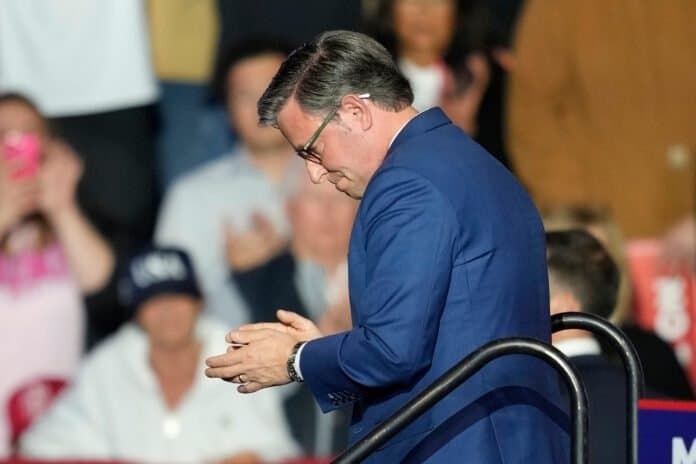
House Speaker Mike Johnson will step aside from Republican leadership after his party’s heavy defeat in the midterm elections, declining to seek support to stay on as House minority leader in the new Congress. According to people familiar with his decision, Johnson told his staff on Wednesday morning that he would not run for the top Republican post, a move that closes a turbulent three-year run in the speaker’s chair.
The decision follows an election night in which Democrats swept to the House majority, leaving Johnson without a path to power. Johnson had spent the campaign insisting that Republicans could defy the usual midterm pattern, in which voters punish the party holding the White House. Instead, the party was trounced across the country, and Johnson conceded the House majority at a watch party in Shreveport, Louisiana, on election night.
ADاشتہار / AdvertisementGoogle Ad
Johnson is expected to remain in the House as a rank-and-file member from Louisiana when the new Congress convenes in January, having won re-election in his district on Tuesday. What he is giving up is the leadership itself. With Democrats in the majority, the speaker’s gavel is expected to pass to House Democratic Leader Hakeem Jeffries of New York, who Democrats are preparing to nominate for the job. The election of the speaker is among the first votes of the new Congress, scheduled for January 3, 2027.
His departure sets up an immediate contest inside the Republican conference. House Republicans are expected to elect their new leader when members-elect gather in Washington next week, and the race is likely to feature two familiar names: Majority Leader Steve Scalise of Louisiana and Judiciary Committee Chairman Jim Jordan of Ohio. Both men reached for the top job before, when Johnson emerged as the consensus choice after weeks of deadlock.
Johnson first won the speaker’s gavel in 2023, after his colleagues ousted the previous Republican speaker, Kevin McCarthy, in a first-of-its-kind vote in House history. A lower-level member of the leadership at the time, Johnson in many ways fell into the job after Republicans could not agree on a successor. He went on to lead the House through a period of razor-thin majorities, drawing close to President Donald Trump and steering the party’s signature package of tax breaks and social services cuts into law.
His tenure also showed how fragile that grip had become. Johnson protected the president and his administration from difficult votes, at times by sending lawmakers home, but he could not prevent the midterm rout that has now cost him the leadership. The contest to replace him will test whether the party’s conservative and hard-right wings can unite behind a single leader, or whether the divisions that produced Johnson’s accidental rise will return in the race to succeed him.
Related Coverage