ADاشتہار / AdvertisementGoogle Ad
Najib Razak’s House Arrest Halted Hours After ApprovalWorld
Malaysia’s attorney general suspended Najib Razak’s move to house arrest hours after a court cleared it, leaving the former prime minister in prison while lawyers review the royal pardon.
Share:
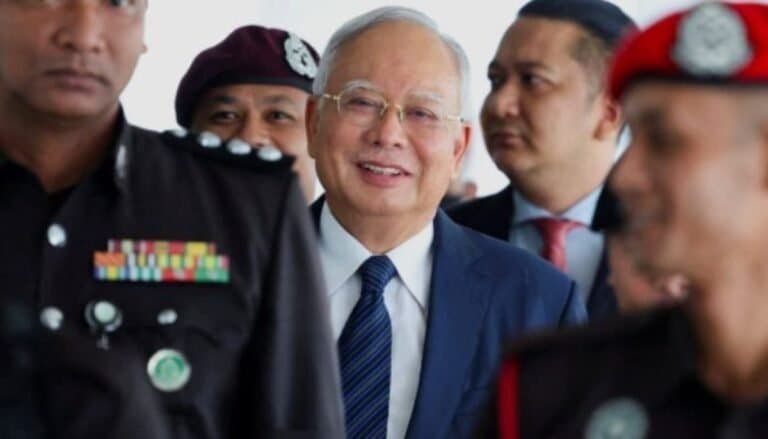
Malaysia’s attorney general has halted former prime minister Najib Razak’s transfer to house arrest, just hours after a court cleared him to leave prison, throwing the fate of the disgraced leader’s sentence into fresh uncertainty.
The Kuala Lumpur High Court had earlier on Friday given Najib the green light to serve the remainder of his sentence at home, after his party, the United Malays National Organisation, paid a required fine of 50 million ringgit, about $12.3 million. The payment fulfilled a key condition of a conditional royal pardon granted in September by King Sultan Ibrahim, which allowed Najib to serve the rest of his term under house arrest until August 23, 2028.
ADاشتہار / AdvertisementGoogle Ad
Najib, who was prime minister from 2009 to 2018, briefly left Kajang Prison on Friday to attend a scheduled dental appointment, according to Transport Minister Anthony Loke. But late on Friday, the Attorney-General’s Chambers said questions had arisen over the legal interpretation of the king’s pardon and the court order allowing him to leave jail.
In a three-page statement, the chambers said the implementation of house arrest should be temporarily suspended until further investigation and clarification. It said that during this period Najib’s detention status must remain unchanged at his current place of detention.
At the heart of the dispute is whether payment of the fine brings Najib’s sentence in the SRC International corruption case to an end, or merely allows him to serve the remainder of it under house arrest. Najib was convicted in July 2020 of misappropriating 42 million ringgit from SRC International, a former unit of the state investment fund 1Malaysia Development Berhad, and was sentenced to 12 years in prison and fined 210 million ringgit. A royal pardon in February 2024 halved the sentence to six years and reduced the fine to 50 million ringgit.
The distinction matters because Najib faces a separate 15-year prison sentence, imposed in December in another 1MDB-related case, along with fines of $2.8 billion. Under the court ruling, that sentence is due to begin only after the SRC sentence has been completed in full. The attorney general’s office said it also needed to examine the legal effect of the High Court’s order of November 6, which directed Najib’s immediate release while requiring him to remain under house arrest until 2028.
Najib’s lawyers have objected to the attorney general’s intervention, and the chambers stressed that its move was not intended to oppose or overturn the king’s decree, but to ensure that the royal pardon and the court order were implemented in accordance with the law. It described the situation as unprecedented and said it would take further action once its review was complete.
For now, Najib remains in detention while the legal questions are examined. The episode has revived debate in Malaysia over the 1MDB scandal, one of the biggest financial frauds in the country’s history, and over how far royal pardons can reshape sentences handed down by the courts.
Related Coverage