The Muttahida Qaumi Movement-Pakistan (MQM-P) has urged law-enforcement institutions and the courts to take notice of Pakistan Peoples Party (PPP) Chairman Bilawal Bhutto-Zardari’s warning that a forced division of Sindh could lead to bloodshed, describing the remarks as a threat to the people of urban Sindh.
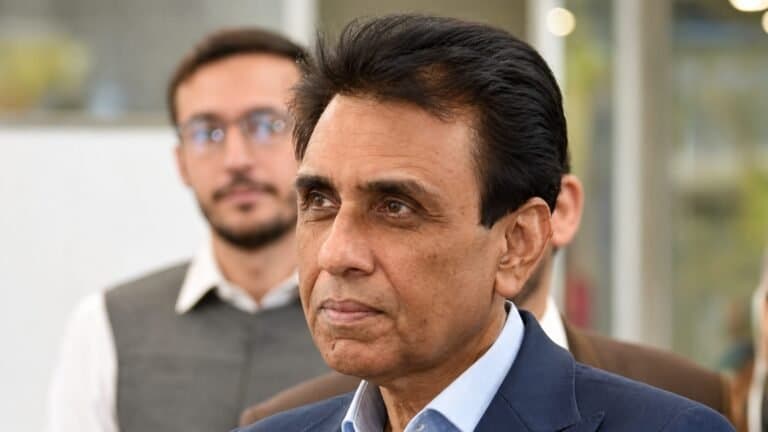
MQM-P Chairman Dr Khalid Maqbool Siddiqui, who is also a federal minister, made the demand at a press conference in Karachi, where he said the people of urban Sindh were “not anyone’s serfs” and “not slaves”. He accused the PPP of denying the province’s cities a fair say in public spending and administration.
Siddiqui asked why, when the creation of new provinces was being discussed across Pakistan, threats of bloodshed were directed only at Karachi, Hyderabad, Mirpurkhas and Nawabshah. “If there is a demand for provinces throughout Pakistan, why should there be bloodshed?” he asked, adding that an argument should be answered with another argument rather than a threat.
He said the responsible law-enforcement and public-order institutions should take immediate notice of the statement, and the courts should also take suo motu notice. He characterised Bilawal’s remarks as a threat to an entire community and urged political leaders to exercise caution while speaking about urban Sindh.
Bilawal made the remarks at the Karachi Press Club on Tuesday, where he warned that any “forced” attempt to carve up Sindh would lead to bloodshed. He also opposed a referendum on new provinces, describing it as an unconstitutional move, and said his party would stand against any such measure.
Siddiqui said the MQM-P had never called only for a province comprising Karachi or a province on the basis of the Muhajir identity, but had advocated administrative units and new provinces across the country wherever population growth and administrative needs justified them. He argued, however, that urban Sindh had the strongest historical, economic and administrative case for a province.
The MQM-P chairman also criticised what he called “feudal democracy”, saying hereditary politics allowed leadership to pass through families, and he questioned whether landlords could adequately represent farmers or business owners could speak for workers. He said the demand for new provinces was neither treason nor a conspiracy, but an unavoidable administrative need.
Referendum debate continues
Senior MQM-P leader Dr Farooq Sattar separately called for a nationwide referendum in December under Article 48(6) of the Constitution, so that the people themselves could decide whether Pakistan needs more provinces. The party has said the creation of new provinces is a constitutional requirement and that most people in urban areas support it.
Under Article 239 of the Constitution, however, any amendment changing Sindh’s boundaries would require a two-thirds majority in each house of Parliament and a two-thirds majority of the total membership of the Sindh Assembly, a hurdle that has made the proposal deeply contentious.
According to reports, Siddiqui also said the party had been asked to reconsider its planned rally in Karachi on November 29 amid law and order concerns. His call for the courts and institutions to take notice does not itself amount to a court order, and no court action had been reported by the time of publication.