The Sindh government has decided to declare Tharparkar a calamity-hit district after a severe drought destroyed most of this season’s crops, prompting Chief Minister Murad Ali Shah to order urgent relief measures for the desert district’s residents.
At a meeting in Karachi, the chief minister was told that all seven talukas of Tharparkar are facing drought-like conditions. According to the briefing, between 85 and 90 per cent of crops in the district have been destroyed or rendered unproductive, while the agriculture extension department estimated the damage at about 90 per cent.
Officials linked the crop failure to the lack of rain. Only 1 to 36 millimetres of rain was recorded across the seven talukas in September 2026, and the rainfall that did arrive was uneven. As a result, crops and the natural grass that livestock depend on dried up before they could mature.
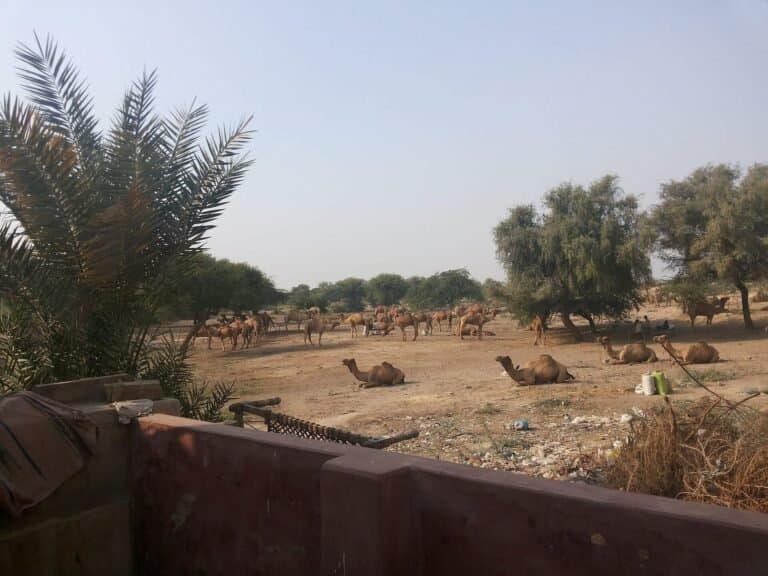
Tharparkar is a desert district where farming and grazing depend almost entirely on monsoon rain. Its rain-fed crops include millet, cluster bean and green gram, and when the rains fail, both harvests and fodder disappear at the same time, leaving farming families and herders in difficulty.
The chief minister directed officials to make sure drinking water reaches the people of Tharparkar. He ordered the immediate repair of reverse osmosis plants that are not working and the restoration of all existing water supply sources without delay.
He also asked the chief secretary to examine whether a water pipeline can be laid from Naukot to Mithi, the district headquarters, and called for long-term planning to secure the area’s water supply. On livestock, he sought recommendations on measures to protect animals affected by the drought.
Relief work in the affected areas will be monitored continuously, officials said. The chief minister said the provincial government would not leave the people of Tharparkar alone and would provide every possible assistance. The government’s stated priorities are drinking water, protecting livestock and relief for affected families.
The declaration as a calamity-hit district is expected to unlock formal relief measures for the district, where the loss of the harvest has hit household incomes and the local food supply. For now, the administration’s immediate task is to keep water flowing, keep animals alive and reach families whose crops have failed.