


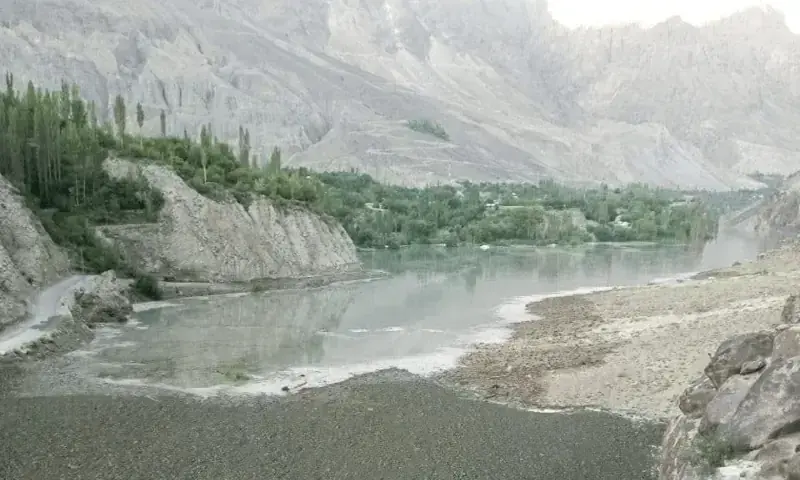
The Pakistan Meteorological Department (PMD) has issued an alert for possible glacial lake outburst floods (GLOFs) in the country’s northern regions, including Gilgit-Baltistan and Khyber Pakhtunkhwa, due to an incoming westerly weather system expected over the weekend.
READ MORE: FIA CTW dismantles human smuggling ring using fake CNICs; Rs32.9m scheme exposed
A GLOF occurs when water suddenly bursts out of a glacial lake, often triggering destructive floods, debris flows, and widespread damage in mountainous communities. According to the Ministry of Climate Change, more than 7.1 million people in these regions remain at risk.
In its advisory, the Met Office stated that a moderate westerly wave is likely to enter northern Pakistan from Sunday, bringing widespread rain, gusty winds, thunderstorms, and isolated heavy downpours across the affected areas.
The department warned that a combination of rising temperatures and heavy rainfall could sharply increase the chances of GLOFs, flash floods, and debris flows in vulnerable districts such as Hunza, Nagar, Shigar, Ghanche, Astore, Swat, Upper Chitral, and Dir.
Residents living near glaciers and rivers have been urged to stay away from stream banks during rainfall, move livestock and valuables to safer locations, and share warnings through mobile and social media channels. Authorities also advised people to watch for sudden changes in water color or unusual rumbling sounds—possible early signs of flooding.
The PMD has instructed local disaster management bodies to remain on high alert, maintain continuous coordination with field teams, and ensure effective communication in remote valleys. Communities have also been encouraged to stay in close contact with local disaster response committees.
Officials reiterated the need for vigilance and precautionary measures to prevent loss of life and property.
Pakistan hosts over 13,000 glaciers—the largest concentration outside polar regions—but climate change is accelerating their melt. Experts warn that thousands of glaciers in northern areas, especially in Chitral and Gilgit-Baltistan, are rapidly retreating due to rising temperatures.
Earlier, the National Disaster Management Authority (NDMA) had cautioned about heightened GLOF risks between March and September 2026, citing warming trends, shifting weather patterns, and the likelihood of early heatwaves.
Last summer, glacial melting, flash floods, and cloudbursts caused severe damage across northern Pakistan, with communities living downstream facing the greatest danger.
For the latest news, follow us on Facebook DAILY HAYAT - Mirpur A.J.K