


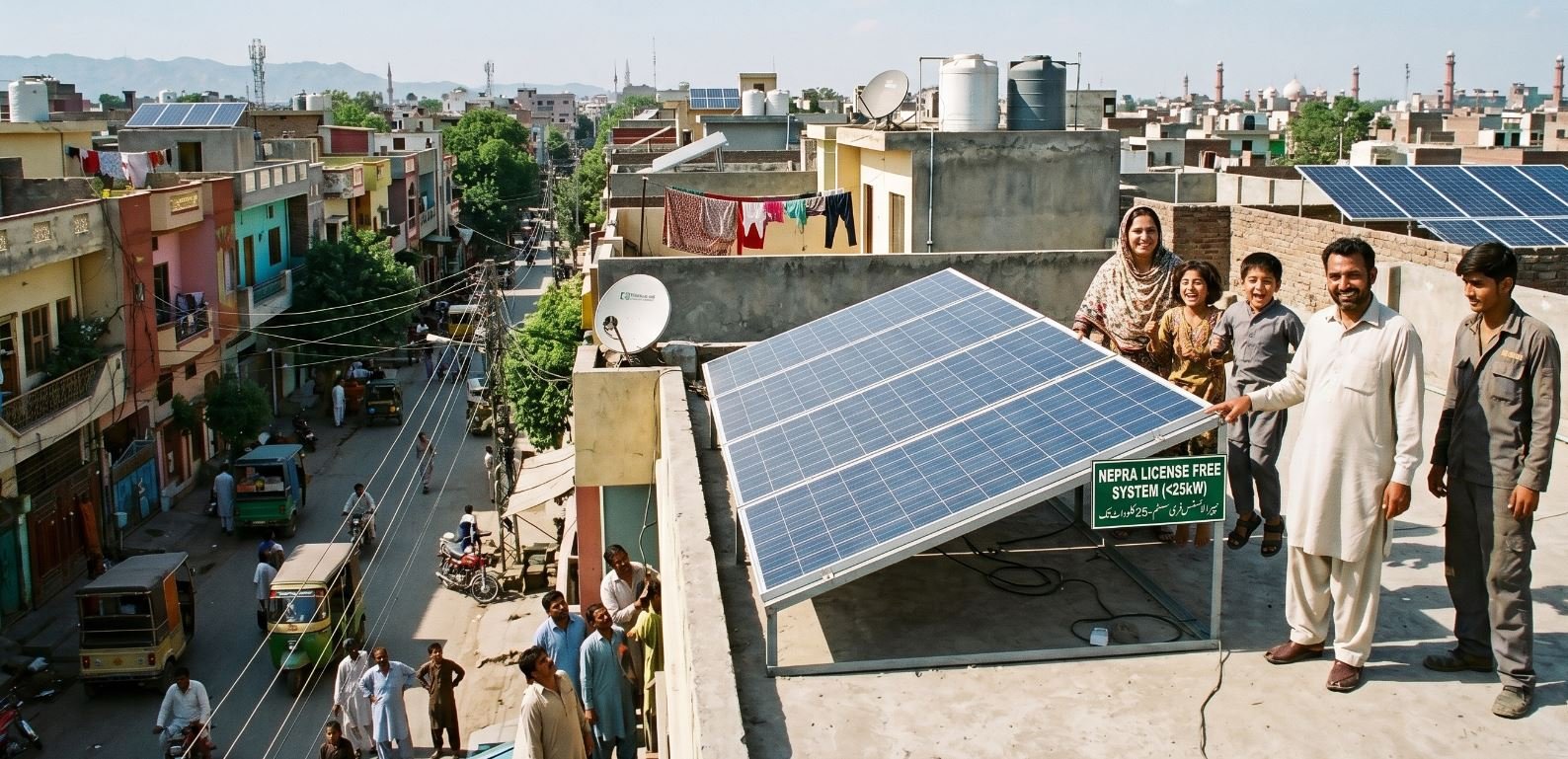
Amid mounting backlash over what critics dubbed a move to “tax sunlight,” Pakistan’s Power Division has urged the National Electric Power Regulatory Authority (Nepra) to scrap both the licensing requirement and associated fees for small-scale solar users generating up to 25 kilowatts.
READ MORE: PIA launches pre-Hajj flights, set to airlift over 55,000 pilgrims
In a statement released on Sunday, the division said it had formally requested a policy review following instructions from Power Minister Awais Leghari. The aim is to eliminate application charges and remove licensing obligations for low-capacity solar prosumers, easing access for households and small users.
The ministry noted it had previously cautioned Nepra about the potential negative impact of the revised rules and had advised reverting to the earlier regulatory framework. Under the 2015 system, solar installations of 25 kW or less were exempt from licensing, with approvals handled directly by distribution companies (Discos) at no cost—an approach that encouraged residential solar adoption.
However, recent prosumer regulations shifted approval authority to Nepra and introduced application fees even for smaller systems. This change drew objections from industry stakeholders, including the Pakistan Solar Association and the Pakistan Alternative Energy Association, who argued that centralizing approvals would create unnecessary delays and administrative hurdles.
The Power Division also pointed out that the Private Power and Infrastructure Board (PPIB) had raised similar concerns, urging consistency with the earlier, more facilitative regime for small-scale systems.
Reaffirming the government’s stance, Leghari stated that the administration remains committed to promoting solar energy, lowering costs, and removing barriers for consumers. Following his directive, the division has now formally asked Nepra to restore the previous system, warning that the current approach could hinder the country’s shift toward renewable energy.
The controversy comes after a series of policy shifts around solar net metering. Earlier efforts to transition toward net billing—seen as reducing financial returns for solar users—were rolled back after public criticism. Later, regulatory changes reduced incentives for some existing prosumers, further fueling discontent.
Although some benefits were reinstated, new licensing requirements and fees introduced earlier this year sparked widespread backlash, including online campaigns accusing authorities of discouraging solar adoption. Initially, the Power Division distanced itself from the licensing policy, describing it as Nepra’s jurisdiction. However, continued criticism appears to have prompted a policy rethink, with the government now pushing to remove the fee and return approval authority to distribution companies.
For the latest news, follow us on Facebook DAILY HAYAT - Mirpur A.J.K