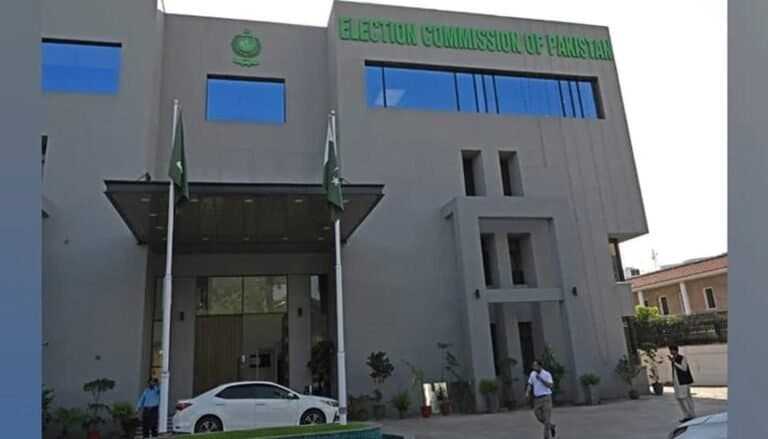
The government has rejected Pakistan Tehreek-e-Insaf’s (PTI) demand for equal representation on the parliamentary committee on electoral reforms and decided to give representation according to the number of seats, sources said.
According to the sources, Federal Minister for Parliamentary Affairs Tariq Fazal Chaudhry informed PTI Chief Whip Aamir Dogar of the government’s position. The government says there is no precedent for giving the government and opposition equal representation on parliamentary committees.
Chaudhry said PTI had been asked to provide the names of five members from the National Assembly and two from the Senate for the Electoral Reforms Committee. He said he had reviewed the records of all parliamentary committees formed on electoral reforms in the past, and that the government’s formula was in line with previous parliamentary traditions.
The federal minister confirmed that the government had rejected PTI’s demand and said the party’s objection to the government’s formula for forming the Electoral Reforms Committee was unacceptable. He urged PTI to join the committee and present its proposals for electoral reform instead of staying away from the process.
The committee in question is the 30-member Parliamentary Committee on Electoral Reforms (PCER). The government and its allied parties have submitted all their nominees, while formation is pending because the opposition has yet to submit its nominees. The National Assembly Speaker will issue the notification once the names are received.
PTI believes that, as in 2017, when an electoral reform process was undertaken, the government and opposition should have equal representation to prevent one-sided decision-making. The party argues that a committee dominated by the treasury benches could push through changes without genuine consensus, and that equal numbers would give the opposition a real say in shaping the rules under which future elections are held.
The disagreement comes at a time when electoral reform is back on the political agenda, with the government keen to move ahead and the opposition insisting on a level playing field in the forum that will draft the changes. How the reforms are agreed — and by whom — is likely to shape the credibility of the process in the eyes of both the public and the political parties.
In response to Chaudhry’s statement, Dogar said he would inform the party leadership of the government’s decision. According to sources, Dogar said the final decision on joining the committee would be made after consultations with the parliamentary party and opposition leaders.
For now, the ball is in PTI’s court. The party must decide whether to accept representation according to its parliamentary strength and take its seat at the table, or to stay out and press its case for parity from outside the committee room.