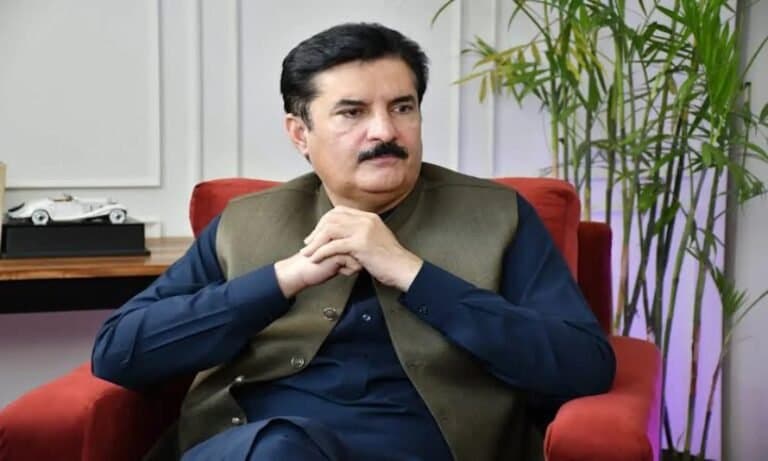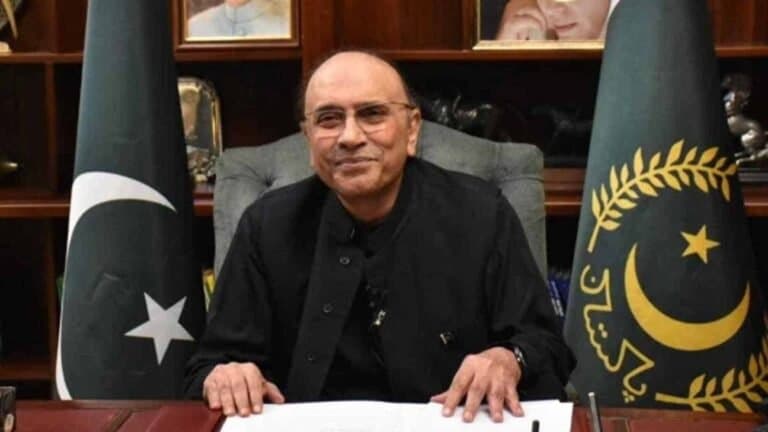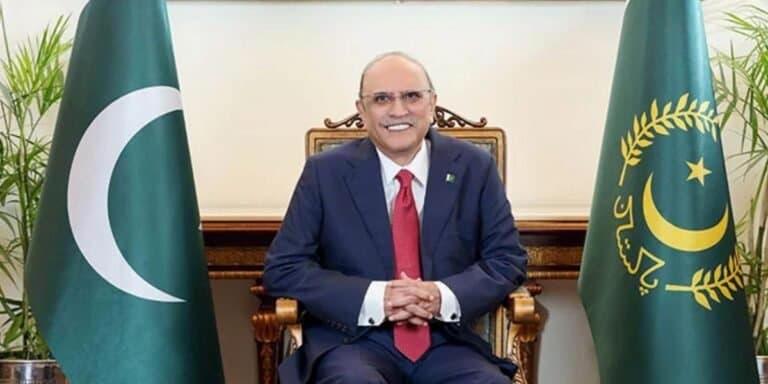
President Asif Ali Zardari has approved five ordinances for Khyber Pakhtunkhwa, according to an official statement issued by the President’s House.
The statement said the president approved the Khyber Pakhtunkhwa Special Initiatives Ordinance, 2026 (Specified Districts), and the Khyber Pakhtunkhwa Special Initiatives Ordinance, 2026 (Other Than Specified Districts).
The president also approved the Khyber Pakhtunkhwa Provincial Assembly (Powers, Immunities and Privileges) (Amendment) Ordinance, 2026, and the Khyber Pakhtunkhwa Societies (Registration) (Amendment) Ordinance, 2026.
According to the President’s House statement, President Zardari also approved the Khyber Pakhtunkhwa Speaker and Deputy Speaker (Salaries, Allowances and Privileges) Ordinance, 2026.
The five ordinances cover special initiatives in designated and other districts, amendments relating to provincial assembly powers and privileges, society registration, and the salaries, allowances and privileges of the speaker and deputy speaker of the Khyber Pakhtunkhwa Assembly.
Ordinances are laws issued by the president on the advice of the federal government, generally when parliament is not in session, and they carry the same force as an act of parliament for a limited period unless approved by the legislature. The President’s House statement did not give a detailed breakdown of the special initiatives, and further details are expected from the provincial government.
The approvals came on a busy day at the Presidency. Earlier on Saturday, President Zardari also approved 12 amendment bills passed by parliament, covering education bodies, archival material, the National Rehmatul-lil-Alameen and Khatam-un-Nabiyyin Authority, and tourist guides, among other matters. The five ordinances are separate from those bills and apply specifically to Khyber Pakhtunkhwa.
The Societies Registration amendment relates to the law under which voluntary organisations and societies are registered in the province, while the assembly privileges amendment concerns the powers and protections of the provincial legislature and its members. The speaker and deputy speaker ordinance sets out their pay, allowances and privileges. Together, the five measures touch on the working of the provincial assembly and on administrative arrangements in the province’s districts, and they will be administered by the relevant provincial departments once in force.
The Khyber Pakhtunkhwa ordinances will now take effect in the province, where the provincial government will be responsible for their implementation. Further details about the special initiatives covered by the two ordinances are expected to be shared by the provincial government in the coming days.