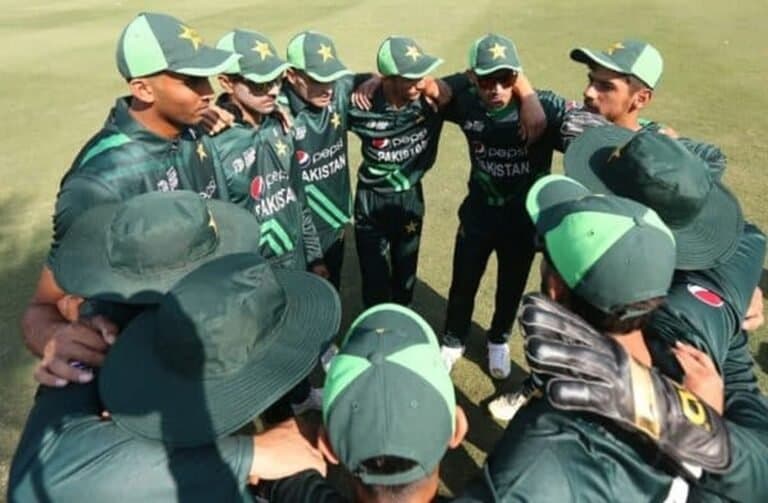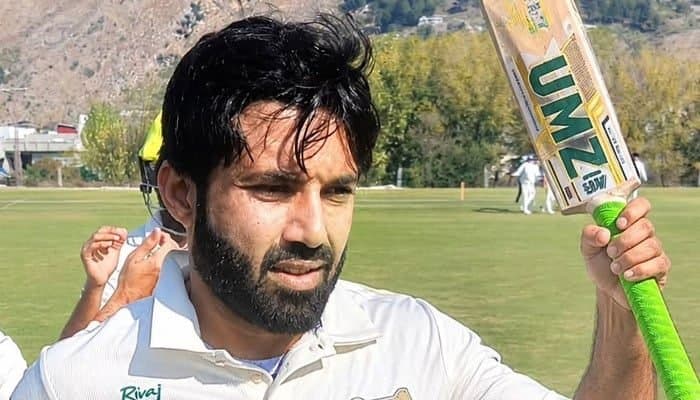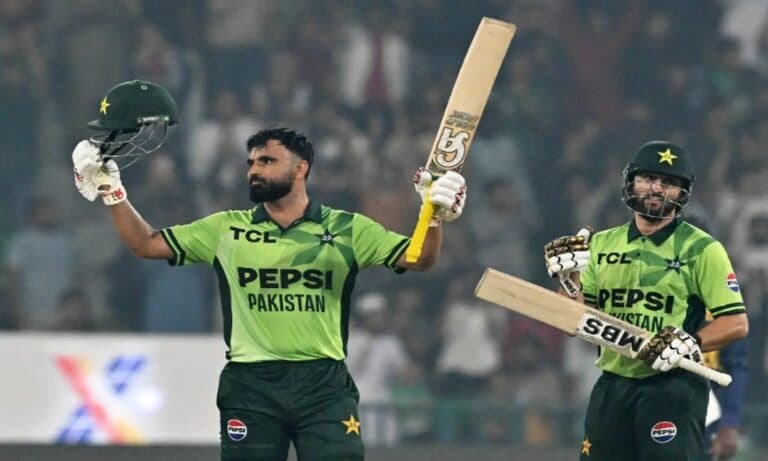
As many as 16 Pakistani cricketers could miss the Abu Dhabi T10 after the Pakistan Cricket Board demanded 10,000 US dollars per No-Objection Certificate from the league’s management, just days before the tournament is due to begin.
The Abu Dhabi T10 2026 runs from 7 to 20 November. According to Cricinfo, the league applied for NOCs well in advance, with the draft held on 30 September, when five of the six franchises picked 16 Pakistani cricketers. The PCB communicated its fee demand at the start of the week ending 5 November, leaving the league scrambling for replacements.
Salman Irshad was picked by the Arabian Aces, while Akif Javed, Hasan Nawaz and Ali Raza were selected by the Emirates Eagles. Naseem Shah was drafted by the Royal Desert Champions. The UAE Bulls secured Shadab Khan, Mohammad Amir, Khawaja Nafay, Khushdil Shah, Azam Khan and Mohammad Wasim Jnr. The United Tigers rounded out the Pakistani representation by picking Fakhar Zaman, Iftikhar Ahmed, Faheem Ashraf, Sufyan Moqeem and Abbas Afridi.
All 16 players now face the prospect of missing the tournament entirely if the dispute is not resolved before play begins. Some team owners considered paying the 10,000 dollar fee out of their own pockets or deducting it from the players’ salaries, but those proposals were ultimately refused, leaving the situation unresolved heading into the tournament’s opening days. Mediation efforts to settle the standoff are under way, with franchises exploring replacement players in the meantime.
The PCB’s practice of charging NOC fees for overseas leagues is not new. The policy first emerged as an issue around the time of the ILT20 launch. More recently, in October 2026, the board demanded 25,000 dollars per player from the Nepal Premier League. Most Pakistani cricketers who had been picked for the NPL returned home without featuring after the PCB withheld their NOCs, although Jahandad Khan and Hussain Talat were among those who continued to play in the competition despite the board’s position.
The PCB’s rationale for the fee structure is partly linked to reciprocity. The board has noted that leagues such as those in the UAE and Nepal do not make a comparable number of their players available for the Pakistan Super League, making the arrangement less attractive from Pakistan’s perspective.
The dispute also sits within the PCB’s overhauled central contract system, under which players are categorised into tracks that determine how many overseas leagues they may join each year. Track A players, who are red-ball specialists, are not permitted to play in any overseas T20 or T10 league. Track AB players, covering dual-format specialists, are allowed to feature in one overseas league per year. Track BC players, who are white-ball specialists, may participate in up to two overseas leagues annually, while Track C players, designated as T20 specialists, have had the cap on T20 appearances removed, and T10 tournaments fall within the scope of this framework.
Previously, the PCB allowed centrally contracted players to play in the PSL plus two foreign leagues, a simpler arrangement the new track-based system has replaced. With the Abu Dhabi T10 starting on 7 November, the players, franchises and league are waiting to see whether a last-minute agreement can still be reached.