


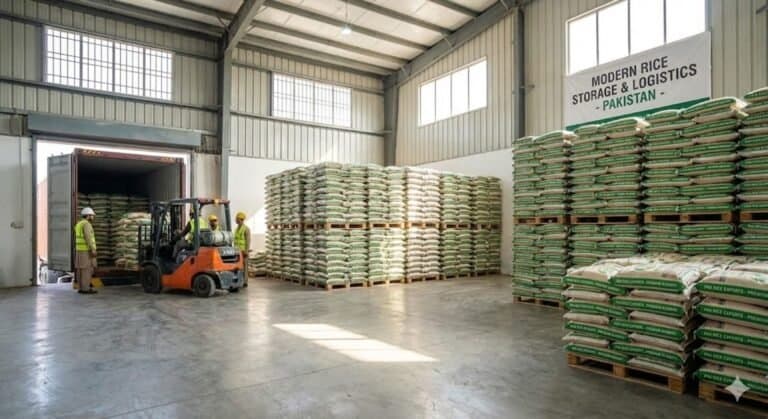
Pakistan’s total rice exports reached 1.351 million tonnes in the first four months of the current fiscal year, rising by 353,000 tonnes compared with the same period last year, according to trade figures reported by Dawn on 23 November 2026.
The growth was led by Basmati, the country’s premium aromatic rice. According to the figures, Basmati shipments rose by 116,000 tonnes to 301,000 tonnes during July to October 2026, an increase of 62 percent on the corresponding period of the previous year.
Non-Basmati rice also performed strongly. According to the same figures, shipments of other varieties rose by 140,000 tonnes year on year to 1.049 million tonnes, taking total rice exports for the four-month period to 1.351 million tonnes.
The increase came despite serious disruption to shipping in the Red Sea, the Strait of Hormuz and the wider Middle East. According to Dawn, heightened tensions involving Iran forced vessels to reroute, pushing up ocean freight charges and marine insurance premiums for exporters.
Analysts cited by the newspaper attributed the sector’s resilience mainly to a bumper Basmati harvest. They pointed to an expanded cultivation area, double-cropping in some regions, higher per-acre yields and favourable weather conditions, along with large carryover stocks from the previous season.
Policy support also played a part, according to the report. The extension of the Drawback of Local Taxes and Levies scheme through September helped exporters, by returning local taxes and levies paid on exported goods.
Non-Basmati exporters recorded growth in a highly competitive international market, despite facing heavily subsidised Indian rice and aggressive offers from Thailand, Vietnam, Cambodia and Myanmar. According to the report, that competition had weighed on the sector earlier in the year, when rice exports fell by 35 percent in February as cheaper Indian rice flooded global markets.
Country-wise trade data for October 2026 showed that the Philippines was the single largest buyer of Pakistani rice during the month, importing 87,478 tonnes. It was followed by Tanzania with 43,747 tonnes and Kenya with 33,078 tonnes, according to the figures.
Other major destinations in October included the United Arab Emirates with 25,305 tonnes, the European Union with 21,200 tonnes, Central Asia with 16,400 tonnes, China with 11,949 tonnes and Saudi Arabia with 7,655 tonnes.
In value terms, separate provisional trade data compiled from Pakistan Single Window and validated by the Federal Board of Revenue and the Pakistan Bureau of Statistics put total rice export earnings at 823.32 million dollars for July to October, up 41.67 percent on the same period last year. Basmati earnings rose to 342.12 million dollars, according to that data.
The same data showed a sharp monthly slowdown in October, when rice export earnings rose only 5.08 percent year on year to 170.92 million dollars, while shipment volumes fell 3.50 percent to 275,146 tonnes. On a monthly basis, export earnings fell 34.43 percent from September, according to the figures.
Despite that October dip, the four-month figures suggest Pakistan’s rice exporters have held their position in key markets even as shipping costs rose and price pressure from regional rivals intensified. Whether the momentum can be sustained through the rest of the fiscal year will depend in part on freight conditions in the Red Sea and the Gulf, and on competition from other major rice exporters.