ADاشتہار / AdvertisementGoogle Ad
Safety row: 7 of 8 Pakistan players leave Nepal leagueSports
Misbah-ul-Haq has criticised ground conditions and floodlights as the Nepal Premier League dispute deepens, leaving only Hussain Talat still in Nepal.
Share:
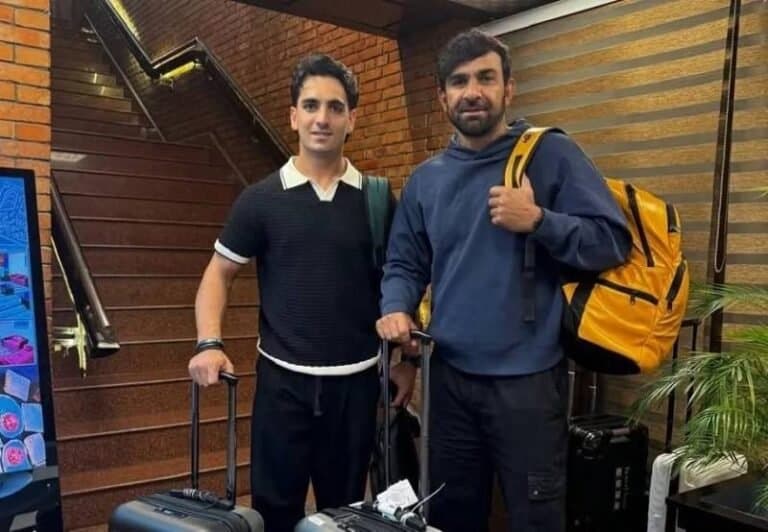
The controversy surrounding the Nepal Premier League has deepened, with reports saying seven of the eight Pakistani cricketers in the tournament have left Nepal and returned home. Hussain Talat is the only Pakistani player still in Nepal, according to the reports, leaving the league’s Pakistani contingent almost entirely depleted midway through the season.
Former Pakistan captain and coach Misbah-ul-Haq has strongly criticised the playing conditions, pointing to the poor state of the ground’s outfield and faulty floodlight towers. In his view, players’ safety cannot be compromised under any circumstances, and substandard facilities put cricketers at real risk of injury. His remarks have added weight to a dispute that began as an administrative row and has now spilled over into questions about the basic safety of the tournament.
ADاشتہار / AdvertisementGoogle Ad
The tournament itself has been troubled from the start. The third season of the Nepal Premier League, an eight-team competition, is scheduled to run from 26 October to 21 November in Kathmandu, with matches at the Tribhuvan University ground in Kirtipur. But even before a ball was bowled, the participation of Pakistani players was thrown into doubt by uncertainty over their no-objection certificates from the Pakistan Cricket Board.
Reports said the board had put previously issued clearances on hold and sought a fee of around 25,000 US dollars per player for fresh clearances, a demand the board has not publicly confirmed in writing. Pakistan board sources later clarified, according to reports, that any such fee had been demanded from the franchises rather than from the players themselves. It did little to calm the situation on the ground, where some players had already travelled to Nepal and others delayed their plans while waiting for clarity.
The Pakistani players named for the league were T20 captain Sahibzada Farhan, Haider Ali, Hunain Shah, Hussain Talat, Iftikhar Ahmed, Hasan Ali and Usama Mir, along with one more player. None of them is currently part of Pakistan’s Test or one-day plans, which is why the franchise stint was seen as a valuable chance to play competitive cricket. Instead, several found themselves caught between their board and the league organisers.
On the field, the dispute grew further when a decision was taken to hold matches over five overs, prompting Sudeurpaschim Royals to protest. The match eventually went ahead after negotiations, with Biratnagar Kings defeating their opponents by 35 runs. Misbah also expressed disappointment that the team’s captain was not invited to the post-match ceremony, a detail that, for many observers, summed up the disorganisation surrounding the event.
For the league, the departure of almost all its Pakistani players is a serious blow. Overseas names are a major draw for a young franchise tournament, and losing them midway through the season damages both its credibility and its crowds. For the players, the episode raises familiar questions about how Pakistan’s board handles overseas league clearances, an issue that also surfaced earlier this year around Major League Cricket in the United States.
Whether the remaining fixtures proceed smoothly, and whether any of the departed players return, will depend on negotiations between the board, the franchises and the league. For now, the Nepal Premier League’s third season will be remembered as much for its off-field disputes as for the cricket played on it, and the safety concerns raised by one of Pakistan’s most respected former captains are unlikely to fade quickly.
Related Coverage