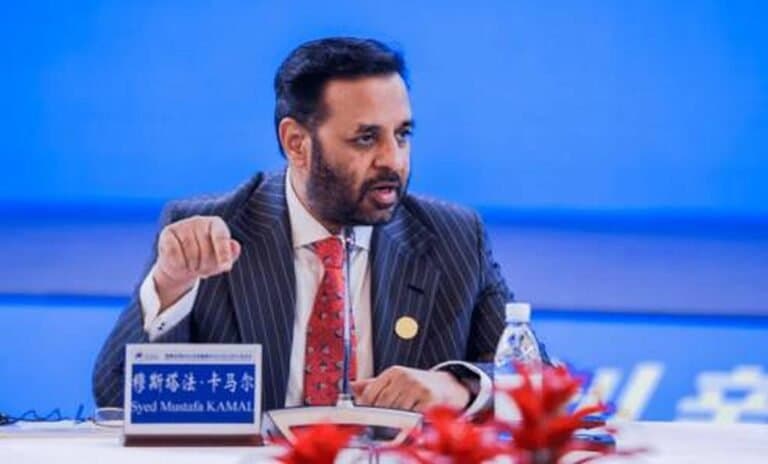
The minister was speaking at the inauguration ceremony of the regional office of the Allied Health Professionals Council in Karachi on Saturday. He said the council’s regional office would bring registration and other official services closer to allied health professionals, students and institutions in Sindh, who previously had to travel to Islamabad for such work.
Kamal said a one-window facility had been set up at the new regional office, where professionals and institutions could seek information and get their queries answered. He called for the establishment of Allied Health Professionals Council centres in all provinces, so that the same services would be available across the country.
The Allied Health Professionals Council is the statutory regulatory body for education, training, professional standards and registration of allied health professionals in Pakistan. It oversees non-physician and non-nursing fields, including physiotherapy, medical laboratory technology, radiology and rehabilitation services.
The minister said digitalisation should be introduced in nursing education to ensure transparency. He stressed that healthcare was not limited to treating patients in hospitals, and that preventive measures were an equally important part of the health system.
He named birth spacing, vaccination, polio prevention and access to clean drinking water among the preventive measures that needed attention, saying that keeping people healthy was as important as treating them when they fell ill.
The minister said around 11 million Pakistanis were suffering from Hepatitis C. He urged people to get tested, and said the government provided a three-month treatment course for the disease.
Kamal also praised overseas Pakistanis, calling them the backbone of the country’s economy, and said they send more than $32 billion in remittances to Pakistan every year.
He said Pakistan could become the world’s fourth most populous country by 2030, and that creating new provinces was essential for effective governance and stability in the country.
The minister had cited the same shortage figure earlier this year, telling a meeting of the Pakistan Nursing Council in March that Pakistan faced a shortfall of nearly 900,000 nurses against global demand of around 2.5 million. He had also announced at that meeting that the council would be restructured along modern lines.