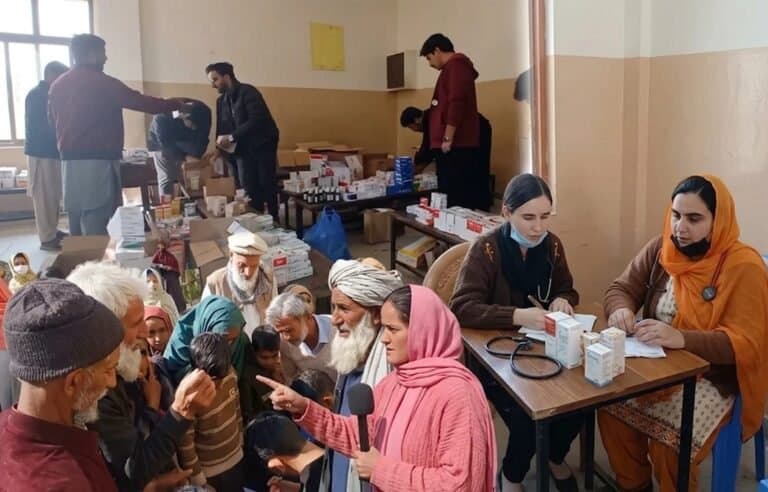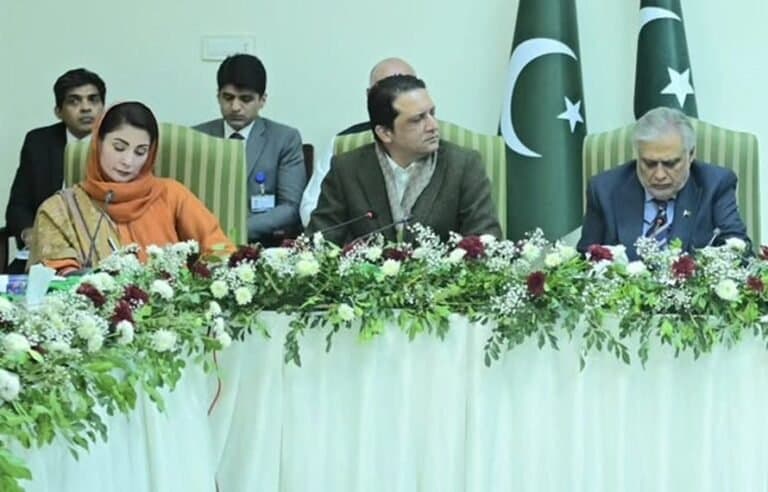
Punjab Chief Minister Maryam Nawaz Sharif has said that launching hospitals, Clinics on Wheels and the Green Bus service in Azad Kashmir is not enough, and that round-the-clock monitoring and effective management of every project are essential so that people get real benefit. She was addressing a meeting of Pakistan Muslim League-Nawaz (PML-N) leaders and the Azad Kashmir leadership in Muzaffarabad on Wednesday, Kashmir Digital reported.
Maryam Nawaz said the government’s responsibility was not only to start development projects but to stay within the people’s reach and ensure their problems were solved promptly. She said Azad Kashmir needed an effective system under which people could take their complaints and problems to the prime minister and receive a response within 24 hours, whether the matter concerned help from the police, the supply of rations, financial assistance because of poverty, health, or any other issue.
Skills training and the Punjab model
The chief minister said the skills development sector had the capacity to deliver quick results, and that Punjab already had a comprehensive model in this area from which Azad Kashmir could also benefit. She said that over the past two and a half years, 500,000 people in Punjab had been given training in information technology, and a large number of them had found employment abroad.
She said the Punjab government had also helped those people with financial assistance, travel expenses and visa processing. She said the provincial government had studied the needs of the international job market and designed its skills programmes accordingly, so that any citizen could learn a skill within six months and earn a respectable living either while staying in their own area or by going abroad, and become self-reliant.
PITB and real-time monitoring
Maryam Nawaz said the Punjab Information Technology Board (PITB) had become the backbone of the Punjab government’s administrative and development work. She said Prime Minister Shehbaz Sharif had laid the foundation of the institution during his tenure as Punjab chief minister, and that through the board, the monitoring of projects, the details of beneficiaries, progress and implementation were tracked moment by moment with the help of technology, which made administration easier and project monitoring more effective.
Law and order and police reforms
The chief minister said special attention needed to be paid to law and order and police reforms in Azad Kashmir. She said it was not enough to start a hospital, a Clinic on Wheels or a Green Bus service; all such projects needed 24-hour monitoring and effective management so that the public received genuine benefit. Pakistan Matters, which also reported her remarks, quoted her as saying that merely starting the projects was not enough and that their round-the-clock supervision was essential.
She said it was necessary to maintain continuous contact with the people, keep them informed about government measures and its future vision, and listen to their problems. The prime minister should remain accessible and visibly present for the public, she said, while ministers should be given responsibilities with clear targets and timeframes, and their performance should be monitored regularly.
Maryam Nawaz expressed the hope that the Azad Kashmir government would soon succeed in providing the people with the basic facilities they may have lacked for decades. She said that when people felt the government cared about their needs and was present to solve their problems, it would bring a positive change and build trust. She prayed for the success of the Azad Kashmir government and for its sincere service to the people, and said the Punjab government would extend all possible cooperation, and that the Azad Kashmir leadership would be given the opportunity to benefit from Punjab’s experience and resources in public service and the implementation of development projects.