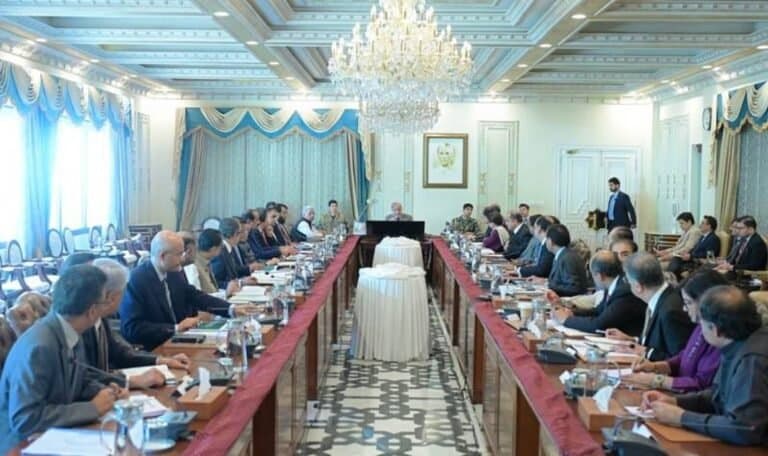
The federal government has unveiled a new automobile policy that promises cheaper cars for ordinary buyers, easier loans for electric vehicles and a sharp rise in car exports. Information Minister Attaullah Tarar and Haroon Akhtar Khan, the prime minister’s adviser on industries and production, announced the framework at a joint press conference in Islamabad on Saturday. The policy, which the government says took effect the same day, is built around six priorities: affordable vehicles, exports, localisation, vehicle safety, electric mobility and transparency.
The clearest promise is lower prices. The government says the cost of vehicles will come down gradually for middle- and upper-income buyers, with every category except luxury models expected to become cheaper. The plan cuts tariffs on kits and components, pushes assemblers to use more locally made parts and opens the market to greater competition, which officials say should ease the burden on families buying their first car.
Electric vehicles sit at the heart of the plan. The government has proposed a sales tax of only 1 per cent on fully electric cars, 6 per cent on range-extended electric vehicles and 9 per cent on hybrids. Electric cars priced up to 50,000 dollars would also be exempt from capital value tax, withholding tax and federal excise duty, while more expensive models would be treated as luxury vehicles and taxed at normal rates. Customs duty on charging-station equipment has been cut to 1 per cent.
Buying an electric car should also become easier to finance. Under the policy, the maximum loan available through the State Bank’s car-financing scheme rises from Rs3 million to Rs10 million, and the repayment period stretches from three years to five. The government is aiming for electric vehicles to make up 30 per cent of all new cars sold by 2030, a target already set out in the National Electric Vehicle Policy 2025-30.
The policy also sets an ambitious export goal: cumulative auto-sector exports of 6 billion dollars over five years, up from about 200 million dollars a year today. Carmakers will face mandatory export and localisation targets, with incentives linked to how much they export and how much they build locally. For buyers, assemblers will not be allowed to demand more than 20 per cent of a vehicle’s price as an advance booking payment.
There is an important condition attached. The proposed sales-tax rates for electric and hybrid vehicles still need approval from the International Monetary Fund, and the government has not yet published the full tariff schedule. Until those notifications appear, it is too early to say exactly how much the price of any individual model will fall.